


This is the attention economy. The politics of personality.
Trump, Farage, Polanski, Mamdani. Hate them or love them, their ability to dominate the narrative and social media is winning out over traditional means.
Trump’s particular approach is, of course, the most egregious. By saturating the market to the nth degree, it’s hard to even remember what happened last week. Let alone care about it.
I think this is the problem facing more traditional media. Younger audiences have grown up with this as the norm. Fake news. A brutal job market. Housing so unaffordable that living in a shipping container is quite an attractive proposition.
The negativity of news is not a good escape. It is, in fact, quite the opposite.
TL;DR
Individuals overpower brands. Mistrust in legacy publishers and social media have helped the creator economy boom. This is the reverse halo effect in action.
For every visitor that reaches your website, 10 are getting to know your brand on platforms you don’t control.
56% of young men and 60% of young women get the majority of their ‘news’ from social media.
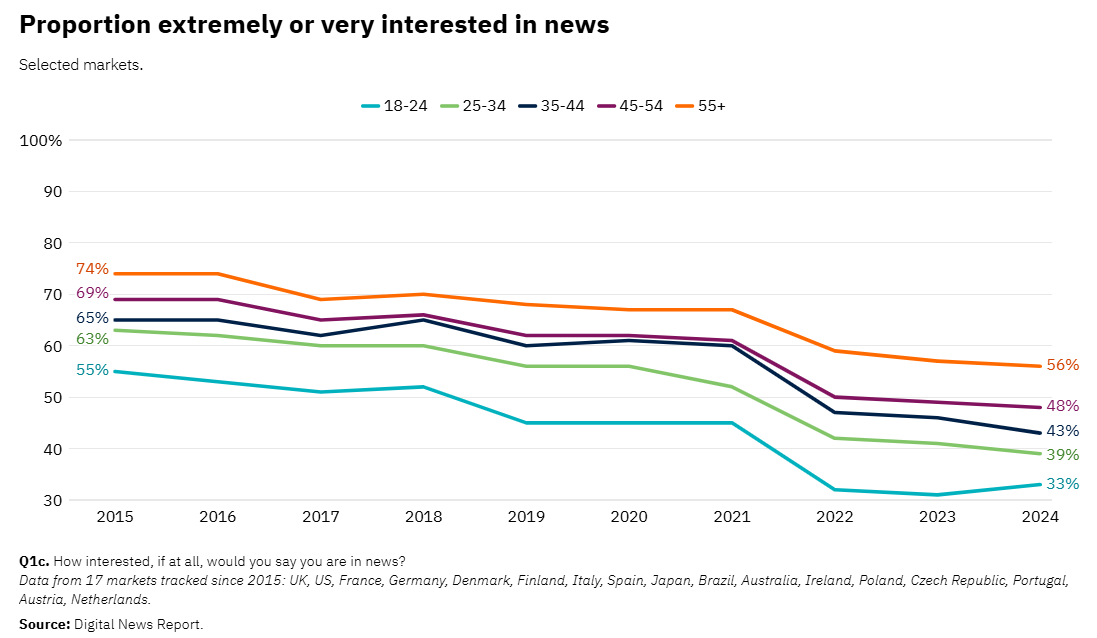
Over the last decade, interest in news fell by 40% among 18-24 year olds and 38% for 25-34 year olds.
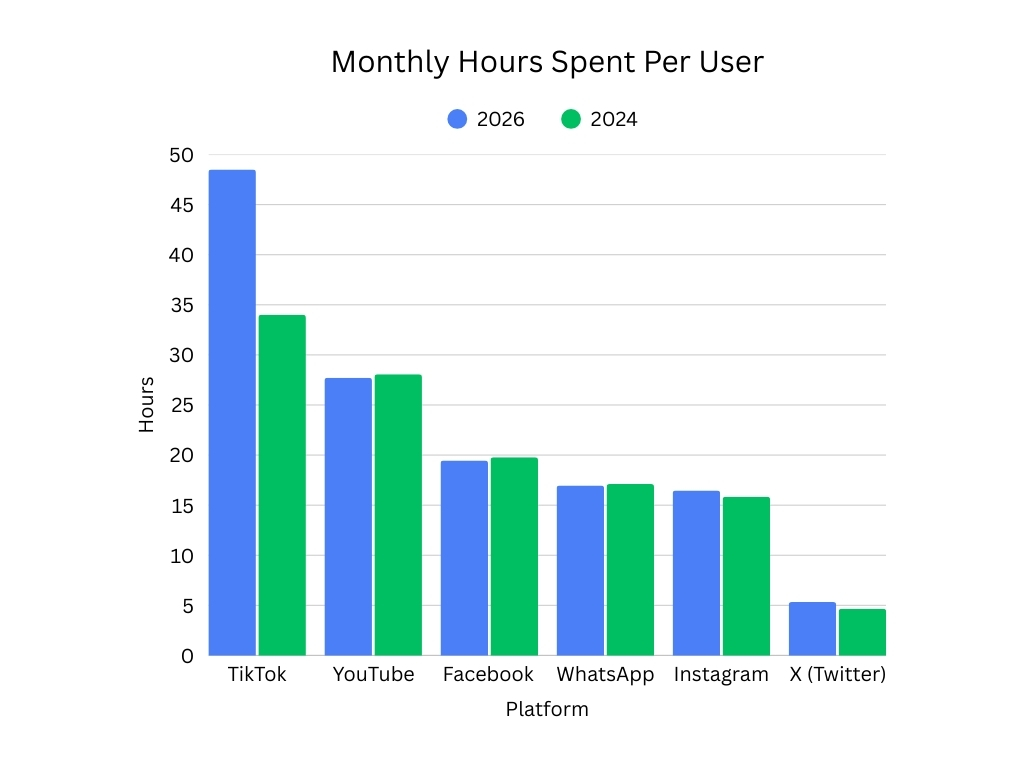
Since 2024, the average user has spent nearly 43% more time on TikTok.
I consult on all things SEO, discoverability, the future of search, your market positioning and approach to audience targeting. My consulting website is here. If you’d like to discuss anything, you know where to find me.
(Young) people don’t care as much about news
Interest in the news is plummeting.
Content consumption is at an all-time high, but between 2015 and 2024, interest in news fell by 40% among 18-24 year olds. 38% for 25-34 year olds. While everyone has lost interest over that time, the younger you are, the more significant this is.
It’s not a market problem. Not entirely. It’s a marketing problem. A content problem. An engagement problem. The fragmentation of the news and content industry means people have options. All pretty terrible in their own way.
Creators are soaring, but publishers are playing the same game they did 10 years ago. We’re competing with platforms so addictive the written word doesn’t cut the mustard anymore. This isn’t a gun fight anymore, it’s an all out nuclear war. And we are still fighting with a rolled up newspaper (albeit the digital edition).
News is seen as depressing. It isn’t ‘fun’ and according to a large proportion of younger audiences, doesn’t represent them. It hasn’t done for some time.
Really, it’s hard to care about anything
The average teen spends 7 hours and 22 minutes looking at screens each day. Nearly five hours a day on social media. More than three hours watching videos.
What doesn’t feature in these reports is how much time is spent reading content. The majority of influencers don’t write because it doesn’t hook people in the same way.
Or they’re illiterate.
When every app has been built to manipulate you psychologically, it’s hard to stop consuming. When you’re constantly on, breaking news becomes a background story. Unless the story is astronomical, it just fades into obscurity as the next disaster strikes 10 minutes later.
This is a structural and psychological shift
According to research from IPSOS and Joe, young people (16-34 years old) trust social media as a news source despite its obvious misinformation.
56% of young men and 60% of young women get the majority of their ‘news’ from social media
This doesn’t even include YouTube (16% of young men and 9% of women)
72% of young men trust YouTube, compared to just 47% of women
79% of them are concerned about misinformation in the content they consume
20 years ago my dad read The Telegraph and The Times. Yours probably did too. We’re the last generation to have grown up with a broadsheet paper on the kitchen table. But this doesn’t exist anymore. Certainly not at the same scale.
This really impacts trust.
The kitchen table paper has been replaced by a personalised algorithm. One we all have a different experience of. As individuals and people who work for or with publishers, understanding this shift and combatting misinformation is fundamental to acquiring a younger audience.
Remember, we don’t see the same version of the world. Where you live, how old you are, what you engage with shapes what you see. You build your very own echo chamber. These algorithms have fundamentally reshaped the nature of free speech by determining who sees what.
Yours is all ‘stop the boats’ and mine’s cat videos and street fights.
Interestingly, trust in news in social media is rising among this age group, up from 45% in 2024 to 52% in 2025. How much of that is just because it’s easy and ‘agrees’ with your world view? Who knows.
Like it or not, the shift is happening with or without us.
Young people don’t care about brands
It’s why the creator economy is absolutely booming. The $250 billion market is predicted to nearly double to $480 billion by 2027, according to Goldman Sachs’ 2023 Creator Economy report.
It has completely reshaped modern marketing, attention and legacy brands ability to attract and retain audiences. People don’t trust brands. Not to the extent they did. Particularly young people.
Authenticity wins in the current environment. People value ‘realness.’ It’s why the spotty teenager can become a millionaire from his mum’s bedroom. There is very little connection with a publisher. To many they’re seen as the establishment.
The British Brainwashing Corporation you could say.
84% of teenagers express a negative sentiment when asked what word best describes news media. They think journalists are unethical and deceitful.
That is, by anyone’s reckoning, shit.
Some see the solution as the problem
In an era where publishers are hemorrhaging organic traffic, UGC sites have bucked the trend. Outside of Reddit, has any single site done better than Substack?
Google owned products excluded of course.
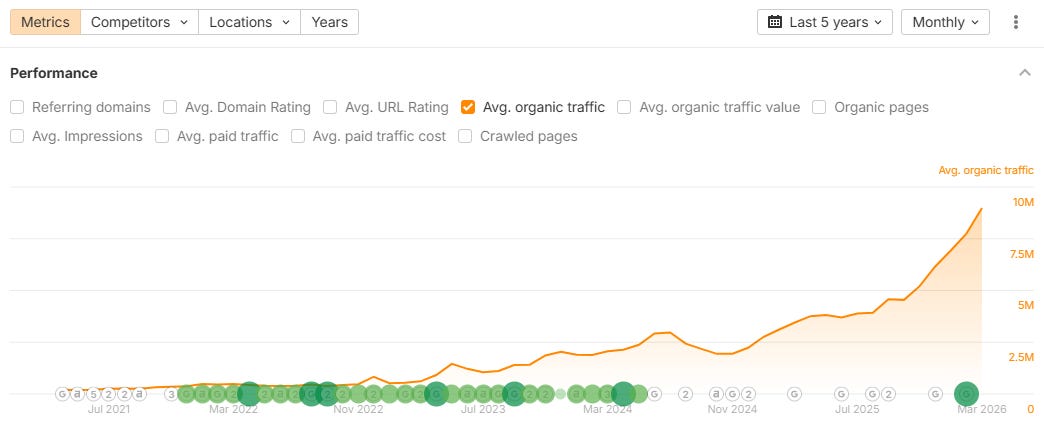
And it’s not a mistake. It’s not luck. It’s not because Google has a deal with Substack (cough, Reddit, cough). It’s because people (and by proxy Google) trust people.
Whilst this isn’t limited just to younger audiences, it’s indicative of what is happening in society. People want to hear people’s real opinions. They don’t want watered down versions or over-optimised content that fits a mould.
So the solution is to build individuals. Individuals that will create a halo effect for your brand.
I can’t think of a better example than Dave Jorgenson - The Washington Post’s TikTok guy. Dave was a senior video producer at the Post between 2017 and 2025, and was responsible for launching the paper’s Tiktok channel in 2019. He built a huge TikTok following, saw an opportunity and bolted.
He also took the audience with him. But them’s the brakes. You’ve got to give people freedom to grow and build something brilliant. They’ll leave. Some to competitors, others to do their own thing.
But it’s the best option. You can’t escape the fact that individual news creators have greater weight than ever. Brands have to lean into it.
Future are doing some really interesting things in this space. By forging brand partnerships with individual creators with Future Collab they’re doing just this. Or at least trying to.
Build people’s profile. Absorb the halo effect to your brand. Rinse and repeat.
You can watch or listen to me talk about this in more detail here:
The discovery layer has changed
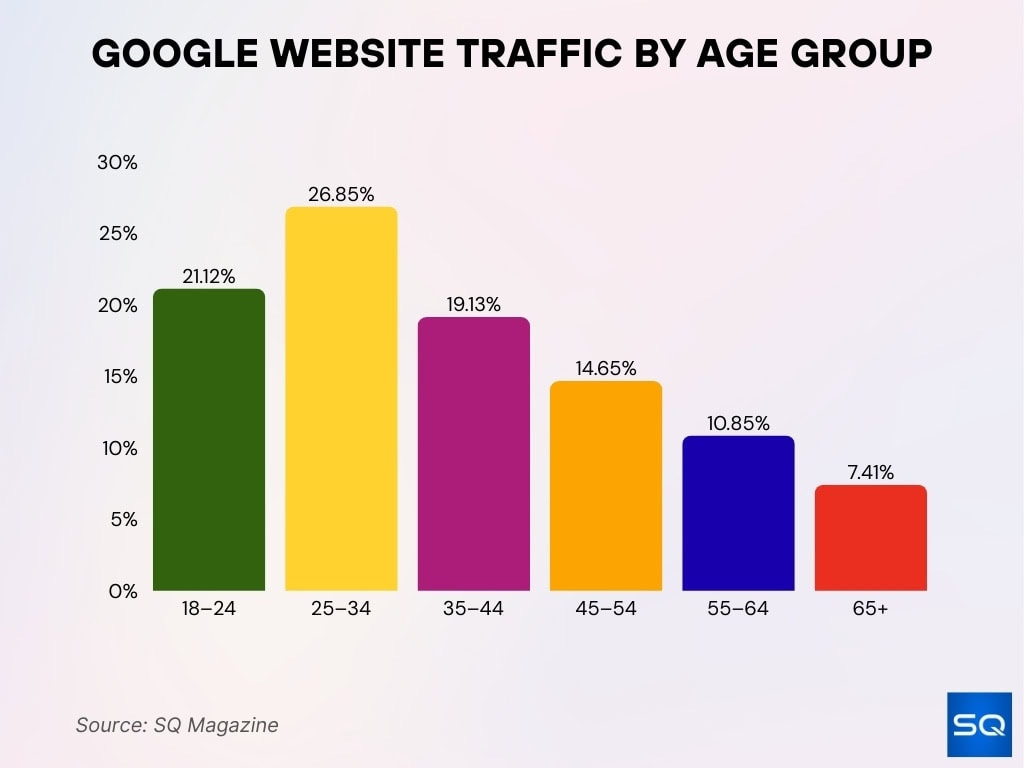
Google isn’t a homepage for younger people.
It’s not their first port of call. It may not even be their second or third. But that isn’t new. And news brands have spent a decade or more focusing on driving clicks to their site. Their entire business (outside of the subscription models) relies on traffic from external sites.
Why Google when you can endlessly swipe through 30 second, AI-made videos telling you how unsuccessful and stupid you are for paying tax? From platforms (and people) specifically designed to make you dependent and unhappy.
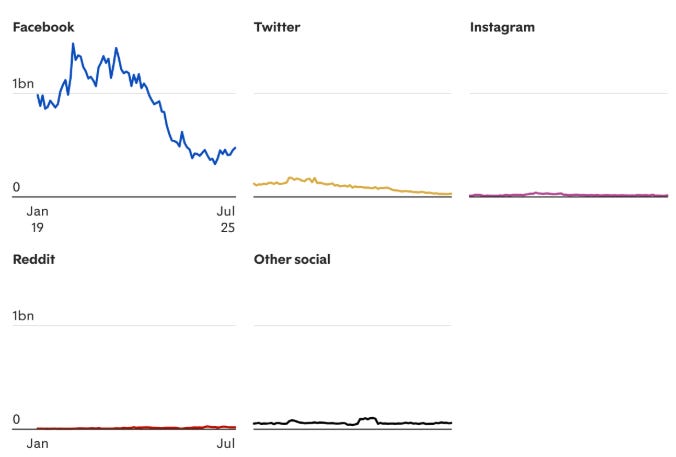
But referral traffic is drying up. And Google is certainly not the worst offender. It is still the most valuable platform by some distance for last click conversions.
A quote I stole from Rand I think sums this up perfectly:
“For every visitor that reaches your website, 10 are getting to know your brand on platforms you don’t control.”
There is no big tech company who wants to do you a favour. They identify their moat (usually customer data), open the gates and close for monetisation in brutal fashion.
This is the modern day version of the 1980s crack epidemic, but with worse people at the helm. Back then it was crack and flares, now its brightly coloured vapes and TikTok.
Google is trying to be sexy
Google’s latest and almost certainly most irritating shift is to attempt turn their search engine into a destination. Prioritising UGC sites, individual creators, videos and answering the question without the need for a click.
Facebook have quietly built an advertising business so evil that children are targeted with some pretty despicable practices. And who’d have though OpenAI and Google would be so evil that we’d all be cheering for Anthropic?
Well, actually I would back the first two to be fucking dreadful. I just though Anthropic would’ve followed suit. The bar is so low in Silicon Valley, that not using your company for mass surveillance and making unmanned WMDs at an incomprehensible scale would be cheered.
I suspect this is quite a clever ploy from Anthropic. Maybe they know they can’t beat Google, but they can become the go-to for people who value security and safety. Which I hope is fucking everyone.
Always worth remembering that you can’t beat the algorithm.
My friends father-in-law started using social media in the last two years. His views have changed. Significantly. He’s been targeted by a world that he didn’t know exists.
Video dominates the young mind
Nothing grabs the young mind like short-form video. And no platform has mastered the art of short-form addiction like TikTok.
TikTok is almost completely at odds with how legacy publishers define themselves. Since 2024, the average user has spent nearly 43% more time on TikTok. When you compare that to all the other platforms, that is an extraordinary difference.
Here today gone tomorrow. No real quality control. Fact-checking. A human touch.
And TikTok’s not much better. (Nice little joke for you there).
Video really relies on individuals being comfortable in front of the camera. Being engaging and, crucially, being willing to do it. Which is a very, very different skill to writing. It’s crucial for a journalist and creator to master, but there are too few who can do it.
And if they can, they’ll probably be better off going it alone.
Links & References
I couldn’t find all of these numbers in the same report, so here is where I sourced the watch hours per user for each platform. Some inconsistencies here of course as the data doesn’t completely align. I accept I am flawed.
Digital 2026 Global Overview Report: A flagship joint study by We Are Social and Meltwater.
Legacy media publications haven’t kept up
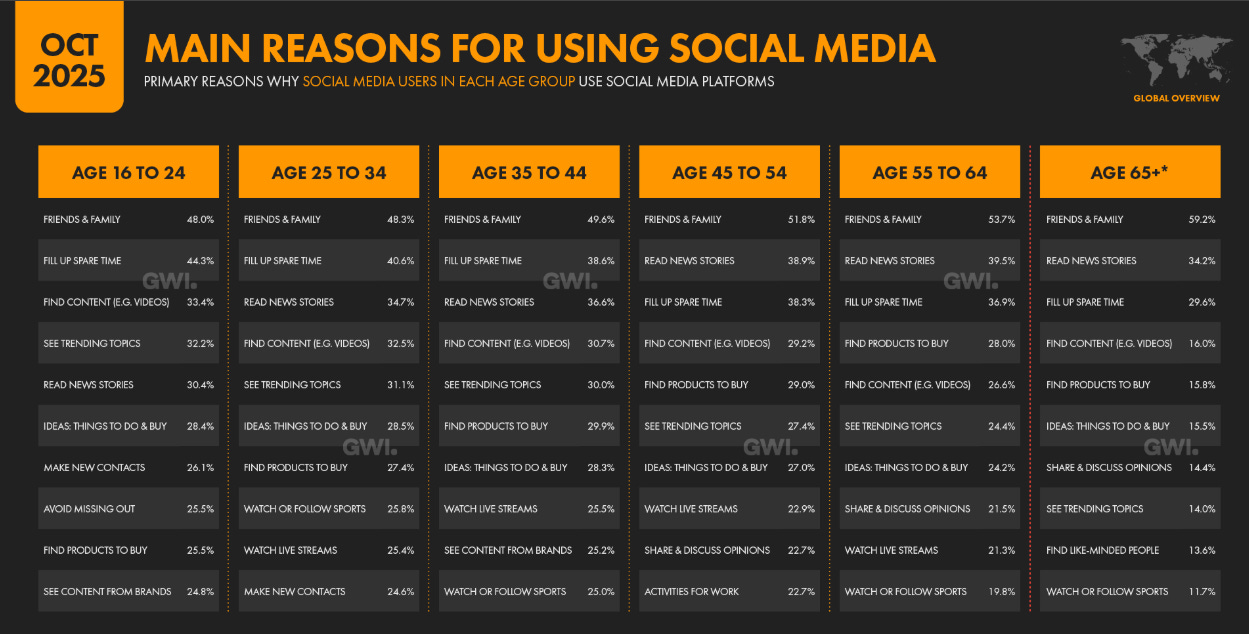
The older you are, the more likely you’re using social media to read news stories. The younger you are, the more likely you are to use it to watch videos.
Some publisher’s social strategies amount to sharing their articles. On platforms that actively devalue an external link.
Make it make sense.
Your content needs to be platform-specific. You have to add value on that platform. You can’t expect Instagram to drive direct conversions. It doesn’t work like that. You should be aiming for a positive interaction. A stop and smile. A save.
Google is pushing UGC and video content because people want to see more of it. Whilst they don’t give a shit about spam or stealing your traffic, they aren’t stupid. They see the shift and are maintaining their relevance at all costs.
You have to make your content work harder for you. Shares videos and photos on the proper channels and your website. Share quotes of articles. Get the writer of a big story to run an AMA. Answer the top comments. Add value to your audience wherever they are.
And, of course, create platform-specific content.
How the NYT have combatted this
But it’s not all doom and gloom.
The NYT now have over 12 million total subscribers. That is, by any measure, a lot. Their affiliate revenue, digital and print subs, advertising revenue and M&A (The Athletic) alongside smaller digital subscription offerings are all thriving.
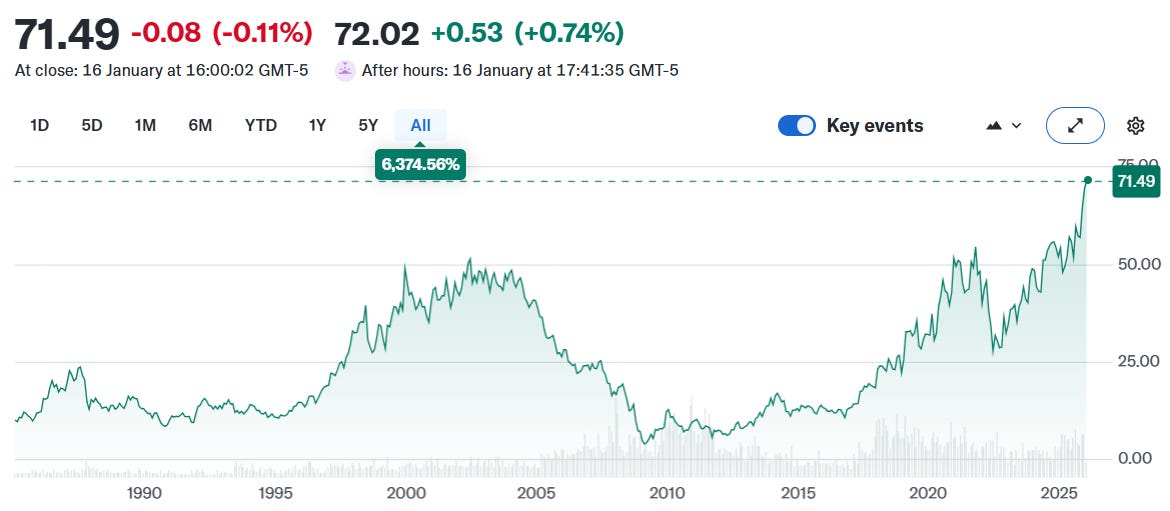
11.3+ million, subscribe only to the company’s digital products
Subscription revenue increased 9.6 percent year over year, to $481.4 million.
Digital advertising revenue rose 18.7 percent, to $94.4 million, beating the company’s estimates, because of strong demand in areas like games and sports
But that’s not all.
This is a truly excellent (paid) look at how they have become so successful - they aren’t a news company anymore. The NYT now has only 1.5 million news-only subscribers, compared to 10.8 million on a bundle or other single-product plans.
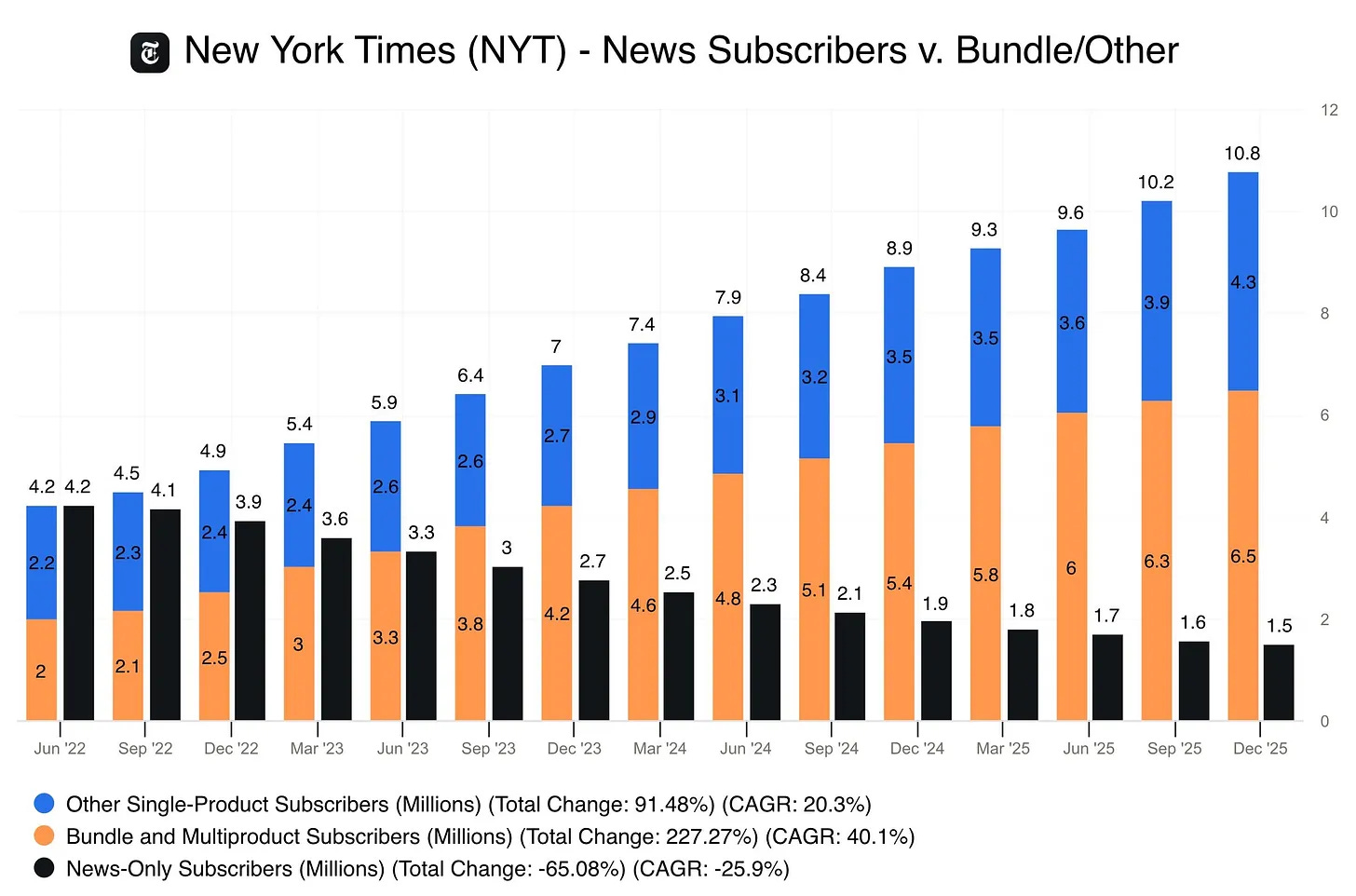
They have managed the decline of interest in news and built a diverse, resilient company that can withstand the decline in its core product.
Worth noting that the decline in news-only subs doesn’t represent that level of decline in people who subscribe for news. Just that fewer people only subscribe to news.

It’s not all doom and gloom
You have to accept you can’t compete with these platforms on scale. But that’s not a bad thing when it’s all shite. According to Matt Southern from Search Engine Journal, AI-generated slop accounts for 21% of YouTube Shorts shown to new users.
This Kapwing study of 15,000 trending channels identified;
278 channels producing nothing but AI slop.
Amassing 63 billion views
221 million subscribers
An estimated $117 million in annual ad revenue
But for you and I, this is short-term bullshit. It’s black hat guff. Drop domain abuse. It works until it doesn’t. It’s not something you or I should or could do.
But scale isn’t where this is won. Meaningful connections are where this is won.
What can we do?
Reporting on the news isn’t enough anymore. Just saying what happened isn’t enough to generate a click. Let alone loyalty. Fucking miles away from a subscription.
Legacy media outlets need to cut through the noise in their own way. Things like BBC Verify are a very good step. But we’ve got to get out there.
We’ve seen right and left wing publications get further away from the middle, I think, directly because of this. Pushing the boundaries further and further to resonate in some way with people.
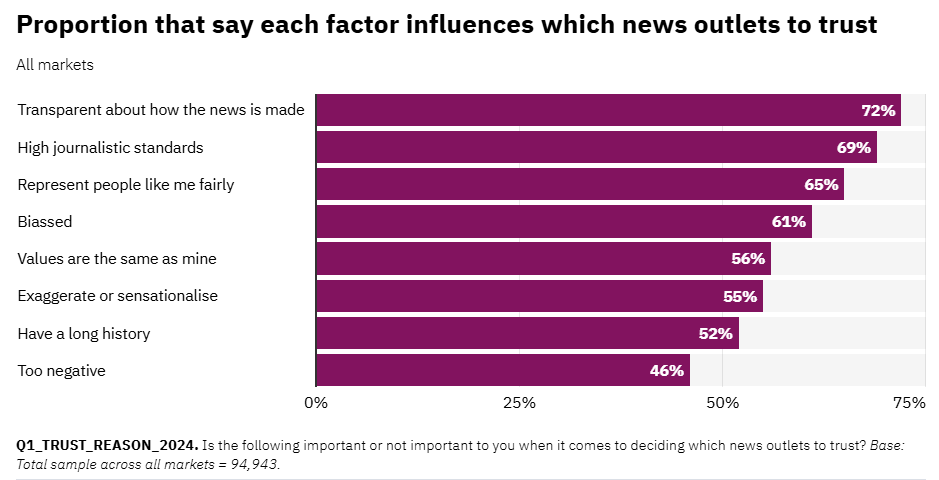
The questions for all publishers are the same;
How do we reach the right people?
How do we cut through the noise?
How do we become habitual?
The answer is very unlikely to be ‘write more.’
It’s about connecting with audiences at the right time and place in the right format. Follow the four E’s of content production. Entertain them when they want to be entertained. Educate them when they want to be educated. Empower and engage them in equal measure. Create great stuff.
Younger people have grown up in a pretty harsh environment when it comes to money, work and screens. It’s not easy. Good for us to remember that.
Great read, and love the quote by Rand. Think I might refer to that one also more often.
I think the nub of the matter for legacy publishers is that young people aren't reading anymore (the "post-literate society" has been a hot topic on substack over the last 6 months).
I'd argue digital print has never really been platform-ised like video, partly as it pre-dates platform businesses. Yes, there's Substack, but it's still very niche, Medium (but, meh), and SM that acted as a news article (sort of) aggregator for a time (and Reddit still does). So publishers got plenty of direct traffic from previous generations. For example, every office I worked in the 2010s I'd always see younger staff browsing the Daily Mail side bar of shame. I don't think you see that with early-20s office workers anymore.
If your default as a young user is now straight-to-video, why would you ever go to a publisher's site? So where does that leave publishers and young audiences? Reliant on ad revenue from video platforms?
As an aside, I keep thinking about the downstream impact of all this on trade media. The vast, vast majority of trade media output is digital print. Is anyone Gen Z and below going to be reading this in a decade or so time? And what happens if/when AI displaces a lot of white collar jobs and therefore there is just a much smaller target audience for those trade pubs? For those publishers with large stables of trade media brands, I'd be very concerned about the future.