


I have written (and spoken) about how to think about evergreen content in the post AI era quite a bit. Arguably too much. But given evergreen content was once the backbone of publisher websites, fair to say some are a little bit in the shit.
It’s our job to help them make a more informed decision.
Is this still worth doing?
That’s where this workbook can help.
This is how I start auditing clients’ evergreen content offerings. I want to help them understand which content categories warrant further investment, should be defended or de-prioritised. You know, with actual traffic, engagement and commercial data.
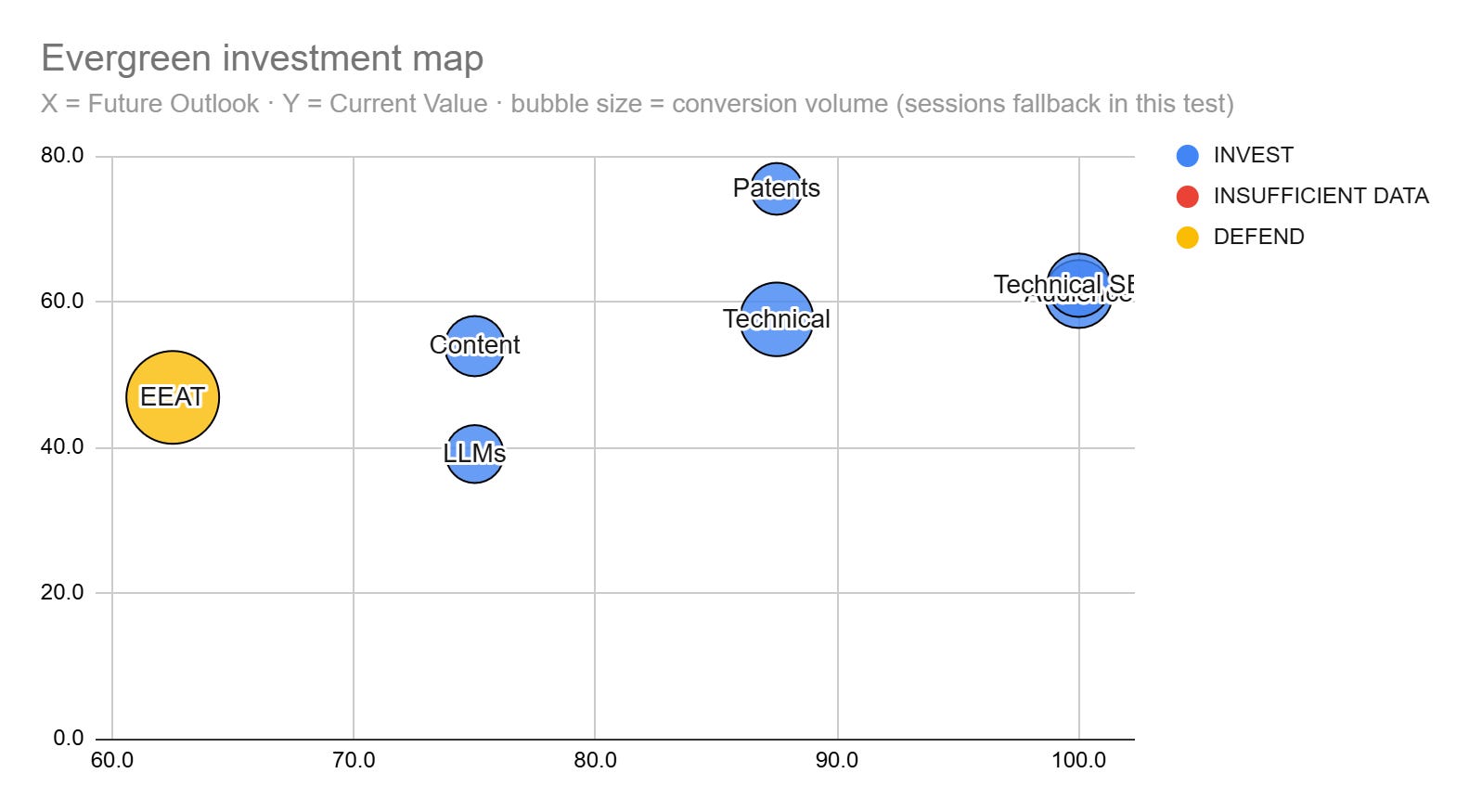
I want the end goal to look something like this (real data from my site, for illustrative purposes only).
You can see the rest of the premium offering here (so I don’t lose sight of what we have and what’s to come) and my consulting practice here if you need some more professional help.
My core content will remain free, but paid subscribers will get monthly tools, scripts or features that solve real problems.
What you need
Three exports:
Google Search Console: Pages, latest 3 months vs the same period last year (comparisons can be fluid, but that’s where I start)
GA4: whole-site landing-page data for the same current period (There is a 93-day limit when a GA4 Exploration uses user-based segments/user data)
GSC Generative AI data: optional, if available, from Search Console’s Generative AI report
You’ll also need to score three things the data can’t sensibly decide for you. You know, where you use your brain:
Defensibility: how difficult the content is to replicate
Strategic Importance: how important it is to the business, brand or audience
Update Effort: how much work it would take to improve or maintain
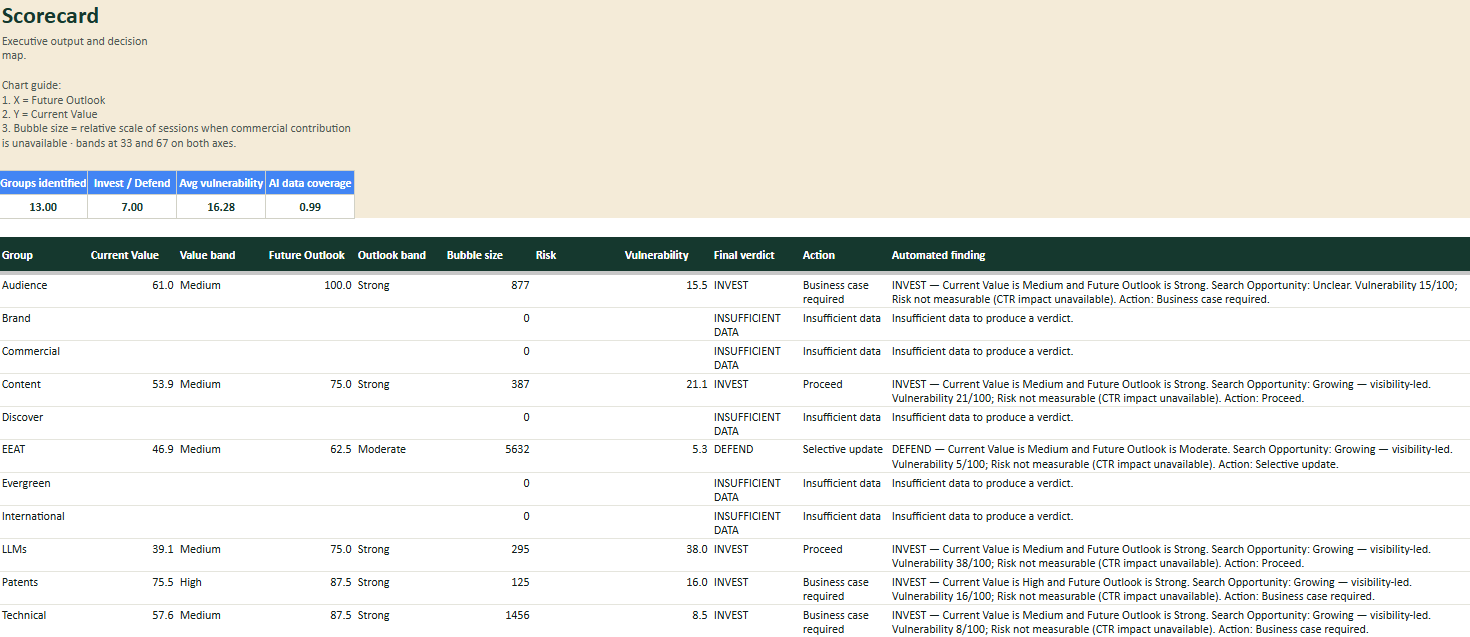
Everything else is calculated automatically. The end scorecard looks something like this:
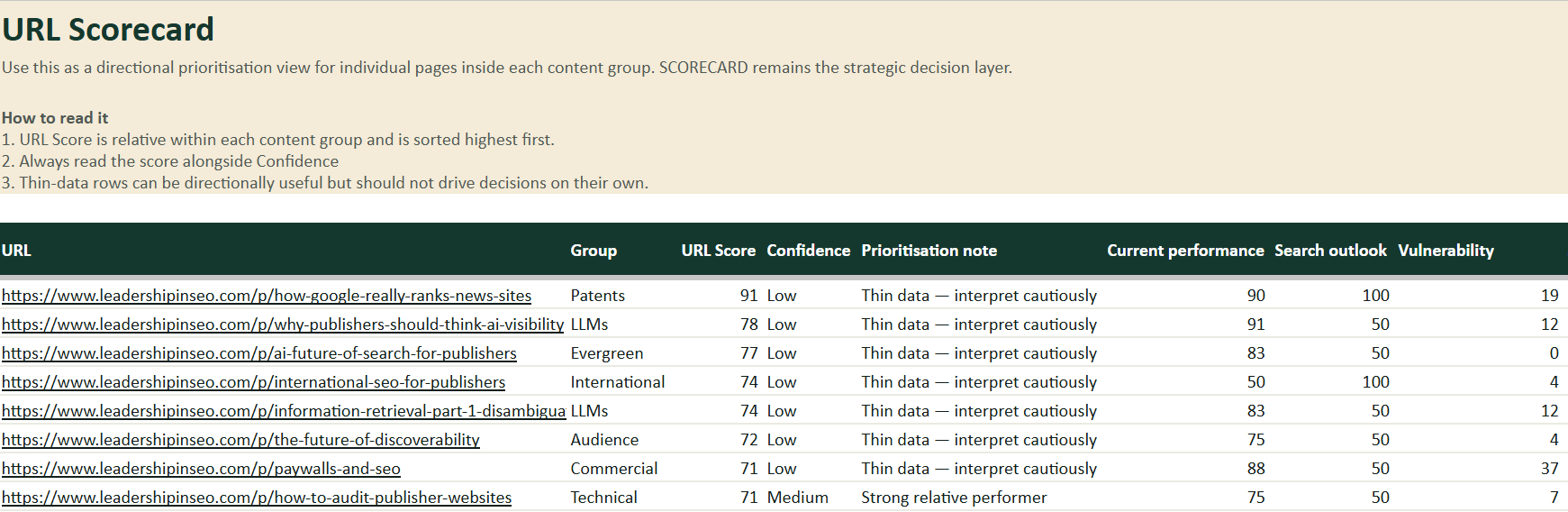
And there is URL level data should you wish to break things down at a page-level.
Worth noting that update effort doesn’t change the current value. It only changes the recommended action after the verdict has been calculated. I don’t want to penalise critical content because it takes a lot of effort - good content should do that.
And here’s how it works in practice
And for newer paid subs, you can understand and estimate your generative AI risk using Search Console data with this article and workbook combo.
Those obsessing over AI and GEO further can use this, I think, excellent guide to entities and subsequent workbook to audit your consistency and AI readiness in the eyes of our machinated overlords.
