


Fair to say the majority of evergreen content will not drive the value it did five years ago. Hell, even one or two years ago. What we have done for the last decade will not be as profitable.
AIOs have eroded clicks. Answer engines have given people options. And to be fair, people are fucking bored of the 2,000+ word article answering ‘what time does x start.’ Or recipes where the ingredient list is hidden below 1,500 words about why daddy didn’t like me.
In response to this, publishers say it will be important to focus on more original investigations and less on things like evergreen content (-32 percentage points).
So you’ve got to be smart. This has to be framed as a commercial decision. Content needs to drive real business value. You’ve got to be confident in it delivering.
That doesn’t mean every article, video or podcast has to drive a subscription or direct conversion. But it needs to play a clear part in the user’s journey. You need to be able to argue for its inclusion:
Is it a jumping off point?
Will it drive a registration?
Or a free subscriber, save or follow on social
More commonly known as micro-conversions, these things really matter when it comes to cultivating and retaining an audience. People don’t want more bland, banal nonsense. They want something better.
The antithesis to AI slop will help your business be profitable.
If you’d rather watch or listen to me talk about this, have at it:
I consult on all things SEO, discoverability, the future of search, your market positioning and approach to audience targeting. My consulting website is here. If you’d like to discuss anything, you know where to find me.
TL;DR
If you’re creating evergreen content ‘just for SEO’ that is, IMO, a bad sign. It needs more strategic thought than search volume + clicks.
Prioritise micro-conversions. Evergreen content may not drive direct conversions, but it should help users become habitual somehow.
People are tired of low-quality, low-effort slop. Standing out is crucial. You have to add value with information gain - which will increase production costs.
You have to sweat your content. Make it shareable. Connect with people. Build owned properties and on rented land. Drive unattributable brand demand.
What’s the problem with evergreen content?
Inherently, nothing. It’s a foundational part of the content pyramid.
In most cases it’s been done to death and AI is very effective at summarising a lot of this bread and butter content.
Over the last 10 years it’s been pretty easy to build a strategy around evergreen content - particularly if you go down the parasite SEO route. Remember Forbes’ Advisor and the great affiliate cull?
The epitome of quantity over quality - it worked and made a fortune.
But I digress.
An authoritative enough site has been able to drive clicks and follow up value with sub-par content for decades. That is, slowly diminishing. Rightly or wrongly.
And not because of the Helpful Content shite. Google nerfed all the small sites long before the goliaths. Now they’ve gone after the big fish.
We have to make commercial decisions that help businesses make the right choice. Concepts like EEAT have had an impact on the quality of content (a good thing). It’s also had an impact on the cost of creating quality content.
Working with experts
Unique imagery
Video
Product and development costs
Data
This isn’t cheap. Once upon a time, we could generate value from authorless content full of stock images and no unique value. Unless you’re willing to bend the rules (which isn’t an option for most of us), you need an updated plan.
Is it still worth it?
It depends.
You need to establish how much your content now costs to produce and the value it brings. Not everything is going to drive a significant conversion. That doesn’t mean you shouldn’t do it. It means you need to have a very clear reason for what you’re creating and why.
If particular topics are essential to your audience, service and/or product, then it should at least be investigated.
One of the joys of creating evergreen content has always been that it adds value throughout the year(s). A couple of annual updates, even relatively light touch, could yield big results.
Commissioning something quality in this space is likely more expensive. It needs to be worth it - it has to form part of your multi-channel experience to make it so.
Unique data and visuals that can be shared on socials
Building campaigns around it (or it’s part of a campaign)
You can even build authors and your brand around it
And if it resonates, you can rinse and repeat year after year
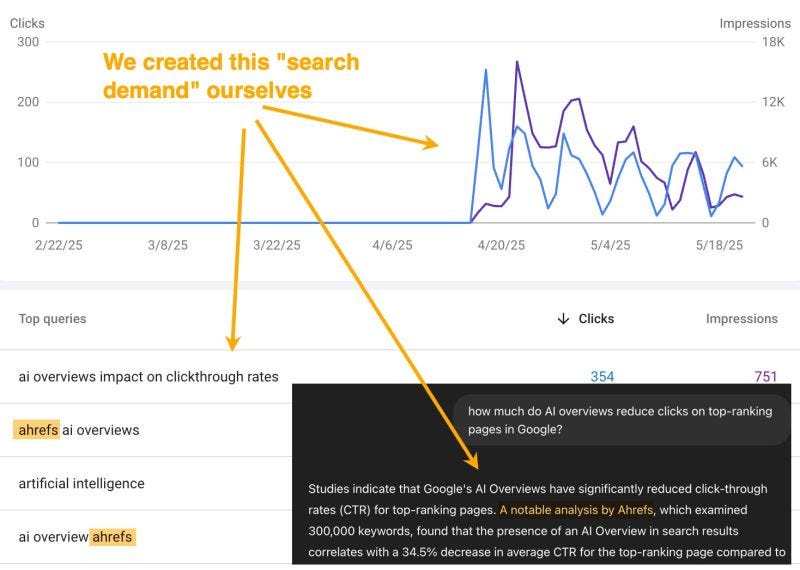
And this type of content or campaign can increase demand for a topic. You can become a thought leader by shifting the tide of public opinion.
For publishers and content creators, that is foundational.
Reframing value - a zero click strategy
Two broadly rhetorical questions:
Do you think in a world of zero click searches, clicks and reach are sensible tier one goals?
Do you want to be targeted against a metric that is very likely to go down each year?
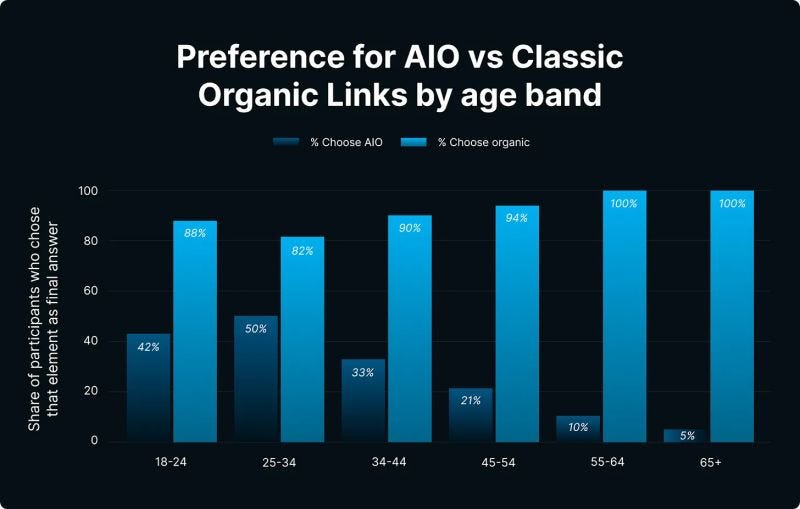
I don’t - on both counts. We should want to be targeted on driving real value for the business.
Something like;
Tier 1: Value - core, revenue and value driving conversions
Tier 2: Registrations (and things that help you build your owned properties), links, shares and comments
Tier 3: Page views, returning visits and engagement metrics
Micro-conversions over clicks. We’re focusing on registrations, free or lower value subscriptions. Whatever gets the user into the ecosystem and one step closer to a genuinely valuable conversion.
Now, could a click be a micro-conversion? If you know that someone who reads a secondary article (by clicking a follow up link) is 10x more likely to register, that follow-up click could be a sensible micro-conversion.
This type of conversion may not directly drive your bottom line. But it forces you and your team to focus on behaviours that are more likely to lead to a valuable conversion.
That is the point of a micro-conversion. It changes behaviours.
You can tweak the above tiers to better suit your content offering. Not all content is going to drive direct tier one or even two value. You just need to have a very clear idea of its purpose in the customer journey.
How can we make sure it adds value?
If what you’re creating already exists, you better make sure you add something extra. You’ve got to force your way into the conversation and unless you can offer something unique, you’re (almost certainly) wasting your time IMO.
I’ll break all of these down, but I think (in order of importance);
Writing content for people
Information gain
Getting it fucking found
Creating it at the right time
Structuring it for bots
Writing content for people
Everyone is obsessed with getting cited or being visible in AI.
I think this is completely the wrong way of framing this new era. Getting cited there, or being visible, is a happy byproduct of building a quality brand with an efficient, joined-up approach to marketing.
The more you understand your audience, the more likely you will be to create high-quality, relevant content that gets cited.
If you know your audience really care about a topic, that’s step one taken care of. If you know where they spend time and how they’re influenced, that’s step two. And if you know how to cut through the noise, that’s step three.
Really this is an evolution in SEO and the internet at large.
Invest in and create content that will resonate with your audience
Create a cross-channel marketing strategy that will genuinely reach and influence them
Share, share, share. Be impactful. Get out there.
Make sure it’s fucking easy to read, share and consume
Your content still needs to reach and be remembered by the right people. Do that better than anybody else and wider visibility will come.
How to Write Great Content for Search (that delivers)

TL;DR Great content needs to hit three of the four E’s - educate, engage, entertain and empower - to truly resonate with your audience.
Information gain
In SEO, we have a different definition of information gain than more traditional information retrieval mechanics. I don’t know if that’s because we’re wrong (probably), or that we have a valid reason…
Maybe someone can enlighten me?
In more traditional machine learning, information gain measures how much uncertainty is reduced after observing new data. That uncertainty is captured by entropy, which is a way of quantifying how unpredictable a variable is based on its probability distribution.
Events with low probability are more surprising and therefore carry more information. High probability events are less surprising and novel. Therefore, entropy reflects the overall level of disorder and unpredictability across all possible outcomes.
Information gain, then, tells us how much that unpredictability drops when we split or segment the data. A higher information gain means the data has become more ordered and less uncertain - in other words, we’ve learned something useful.
To us in SEO, information gain means the addition of new, relevant information. Beyond what is already out there in the wider corpus.

Google wants to reduce uncertainty. Reduce ambiguity. Content with a higher level of information gain isn’t only different, it elevates a user’s understanding. It raises the bar by answering the question(s) and topic more effectively than anyone else.
So, try something different, novel even, and watch Google test your content higher up in the SERPs to see if it satisfies a user.
This is such an important concept for evergreen content because so many of these queries have well established answers. If you’re just parroting these answers because your competitors do it, you’re not forcing Google’s hand.
Particularly if you’re still just copying headers and FAQs from the top three results. Audiences are not arriving at publisher destinations through direct navigation at the same scale. They encounter journalism incidentally, through social feeds, not through habitual site visits.
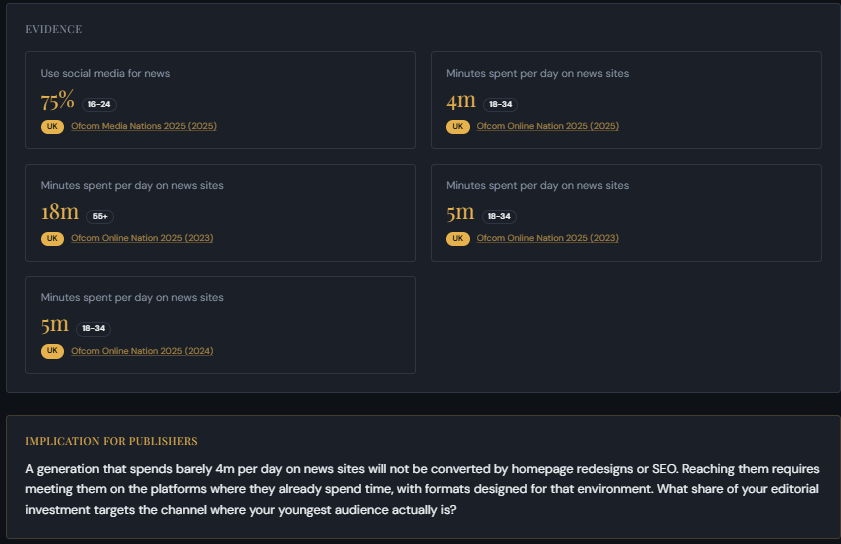
You’ve got to meet them there and force their hand. Understand how Google ranks evergreen content and add real value.
According to this patent - Contextual estimation of link information gain - Google scores documents based on the additional information they offer to a user, considering what the user has already seen.
“Based on the information gain scores of a set of documents, the documents can be provided to the user in a manner that reflects the likely information gain that can be attained by the user if the user were to view the documents.”
Structuring it for bots
Bots, like people, need structure to properly ‘understand’ content.
Elements like headings (h1 - h6), semantic HTML and linking effectively between articles help search engines (and other forms of information retrieval) understand what content you deem important.
Whilst the majority of semi-literates ‘understand’ content, bots don’t. They fake it. They use engagement signals, NLP and the vector model space to map your document against others.
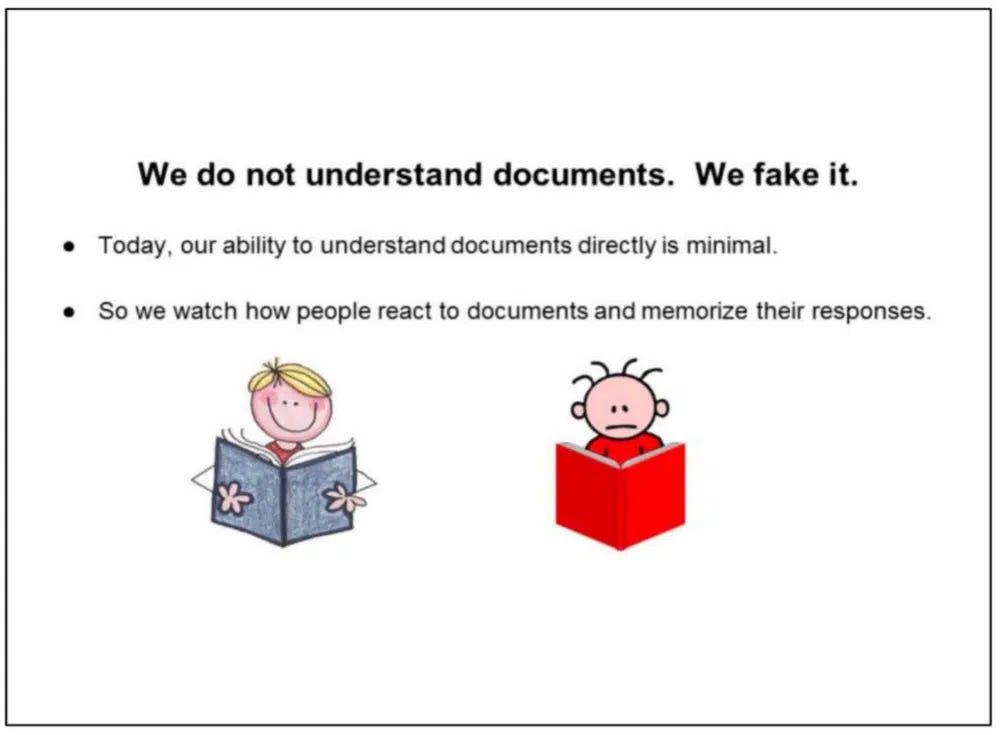
They can only do this effectively if you understand how to structure a page.
Frontloading key information
Effectively targeting highly relevant queries
Using structured data formats like lists and tables where appropriate (these are more cost effective forms of tokenisation)
Internal and external links
Increasing contextual knowledge gain with multimedia (yes, Google can interpret them)
The more clearly a page communicates its topic, subtopics, and relationships, the more likely it is to be consistently retrieved and reused across search and AI surfaces. This has a compounding effect.
Rank more effectively (great for RAG, obviously) - feature more heavily in versions of the internet - force your way into model training data.
If you need to get development work put through, frame it through the lens of assistive technology. Can people with specific needs fully access your pages?
As up to 20% need some kind of digital assistive technology, this becomes a ‘ranking factor’ of sorts.
Starting or steering the wave
I won’t go through this in much detail as I’ve written a really detailed post on it. Basically;
Track and pay very close attention to spikes in demand (Google Trends API being a very obvious option here)
Make sure you’re adding something of value to the wider corpus
If quality content is already out there and you have nothing extra to add, consider whether it’s worth spending money on (SEO is not fucking free)
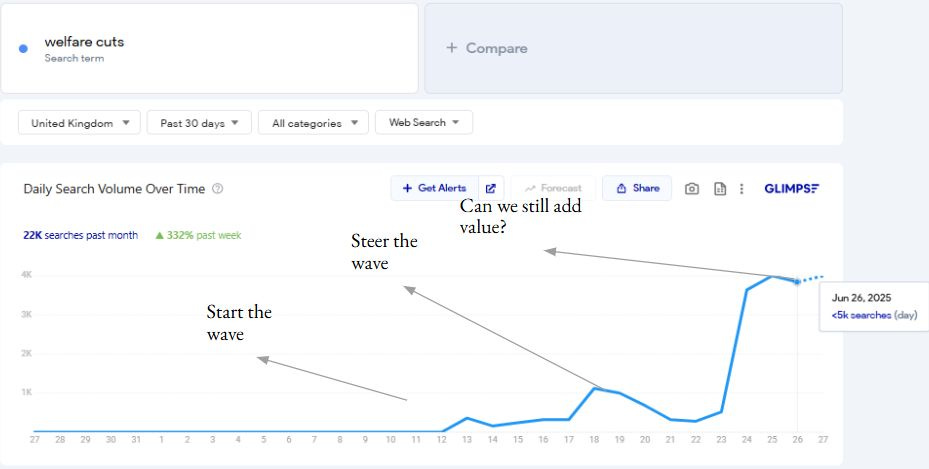
Whilst this is primarily for news, you can apply a similar logic to evergreen content if you zoom out and follow macro trends.
Creating it at the right time
Evergreen content still spikes at different times throughout the year. Take Spain as an example. There’s much more limited interest in going to Spain in the Winter months from the UK. But January (holiday planning or weekend breaks) and summer (more immediate holiday-ing with the kids) provide better opportunities to generate traffic.
You’re capturing the spike in demand by updating content at the right time. Particularly if you understand the difference in user needs when this spike in demand happens.
In January, get your holiday planning content ready
In the summer, get your family-friendly and last minute holiday content up and running
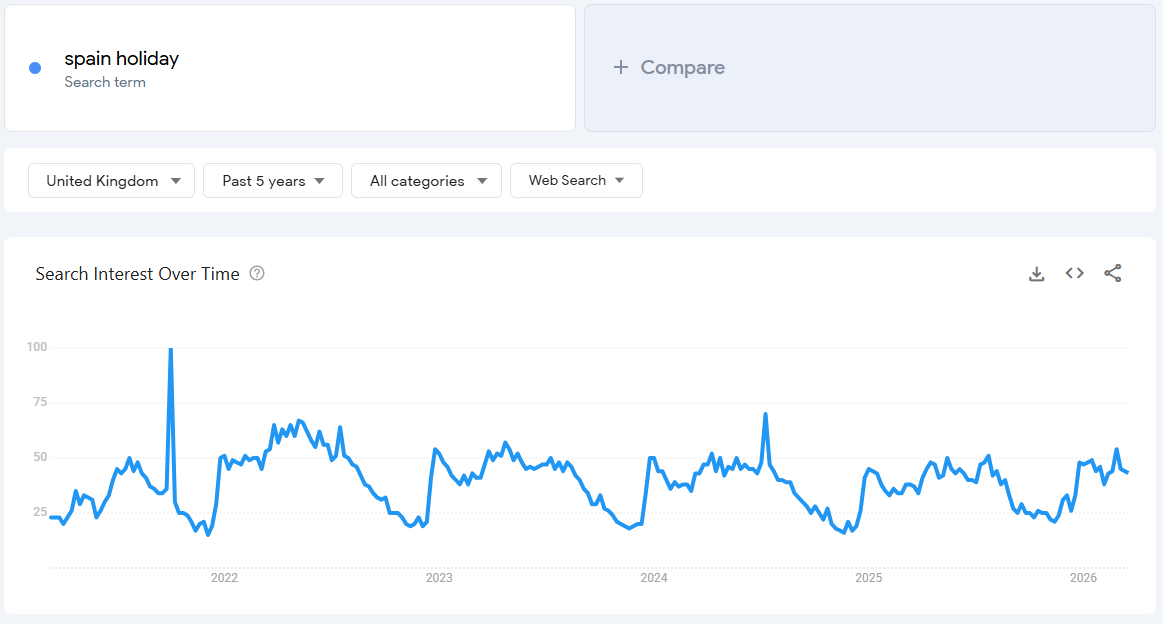
Demand for evergreen topics can be cyclical. In this example you would want to capture the spike(s) with carefully planned updates, so you have up-to-date content when a user is really searching for that product, service or information.
How do I know what to create?
Well, what matters to your brand and your users? Have you asked them?
By the very nature of new and evolving topics and concepts, not everything ‘evergreen’ has been done.
New topics rise. Old ones fall. Some are cyclical.
My rule(s) of thumb would be to establish;
Is the topic foundational to your product and service?
Does your current (and potential) audience demand it?
Do you have something new to add to the wider corpus of information?
If the answer to those three is a broad variation of yes, it’s almost certainly a good bet. Then I would consider topic search volume, cross-platform demand and whether the topic is trending up or down in popularity.
Is it ‘just for SEO?’
There are some things you should be doing ‘just for SEO.’ Content isn’t one of them. You can yell topical authority until you’re blue in the face. If you’re creating stuff just for SEO - kill it.
IMO these plays have been dead or dying for some time. The modern day version of the internet (in particular search) demands disambiguation. It demands accuracy. Verification that you are an expert. Otherwise you’re competing with those who have a level of legitimacy that you do not.
Social profiles, newsletters, real people sharing stories. You’re competing with people who aren’t polishing turds.
If all you’re thinking about is search volume or clicks I don’t think it’s worth it.
Video still sells
YouTube and TikTok are fucking flying. The young mind cannot escape big tech’s immeasurable evil.
They’re bored of reading the news, but they really, really like video. They will watch it.
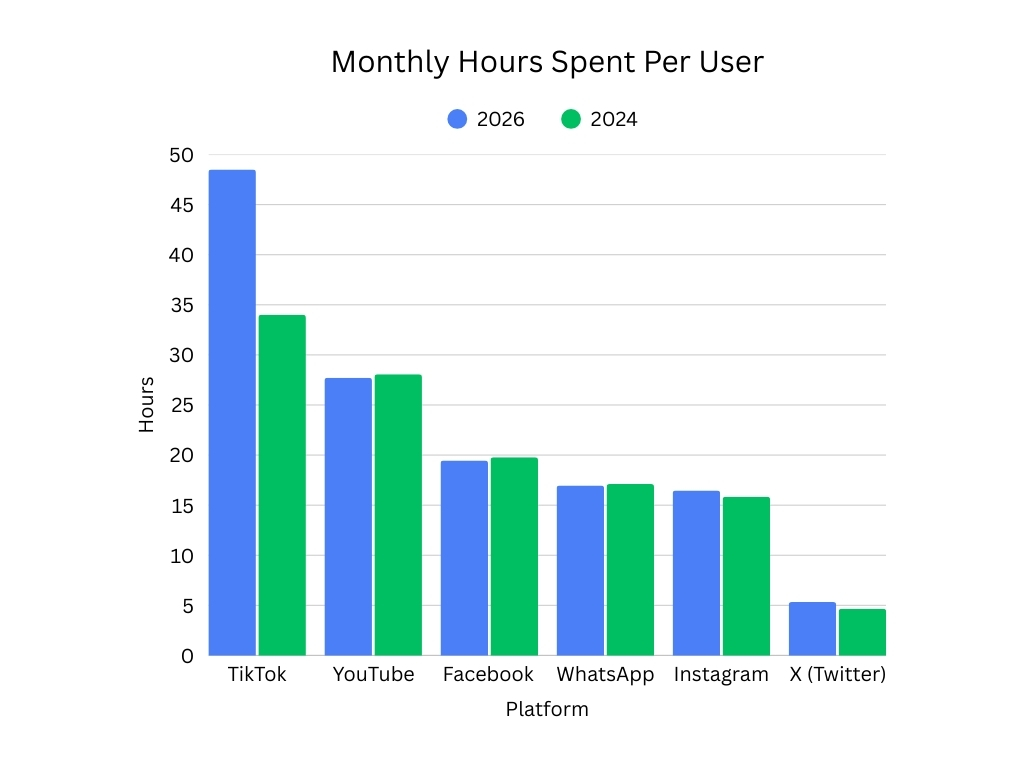
The good news for you (and me), is that platforms like YouTube are still very viable opportunities to build something brilliant. Memorable even. They’re also far more AI-resilient - even if Google desperately tries to summarise fucking everything with AI.
Build on rented land
And this brings me nicely onto rented land. Platforms you don’t own.
We’ve spent years creating assets (your websites) to deliver value in search. Owning all of your assets and prioritising your site above all else. But that is changing. In many cases, people don’t reach your website until they’re already made a purchasing decision.
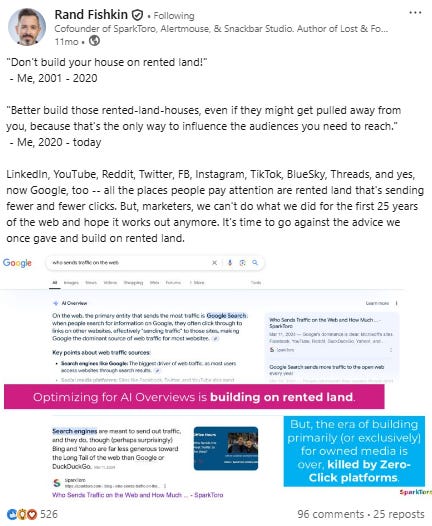
So you have to get your stuff out there. Create large, unique studies. Cut them into snippets and short-form videos. Use your individual platform to boost your profile and the content’s chances of soaring.
This is IMO, particularly prescient for publishers. You’ve got to get out there. You’ve got to share and reuse your content. To make the most of what you’ve created.
Sweat your assets. Even if senior figures aren’t comfortable with this - you need to make it happen.
People have been espousing how important it is to feature as part of the answer. And that may be true. But you’re going to have to be fucking good at selling your projects in if there’s no clear attribution or value.
Share. Share. Share.
It might not have the spikes of news, but evergreen interest still spikes at certain times in the year.
Get people - real people - to share it. To have their spin on it.
Outperform the expected early stage engagement and maximise your chance of appearing in platforms like Discover with wider platform engagement.
You have to work harder than before.
I shared an example of this around a year ago, but to revisit it - I now have 11 recommendations from other Substacks.
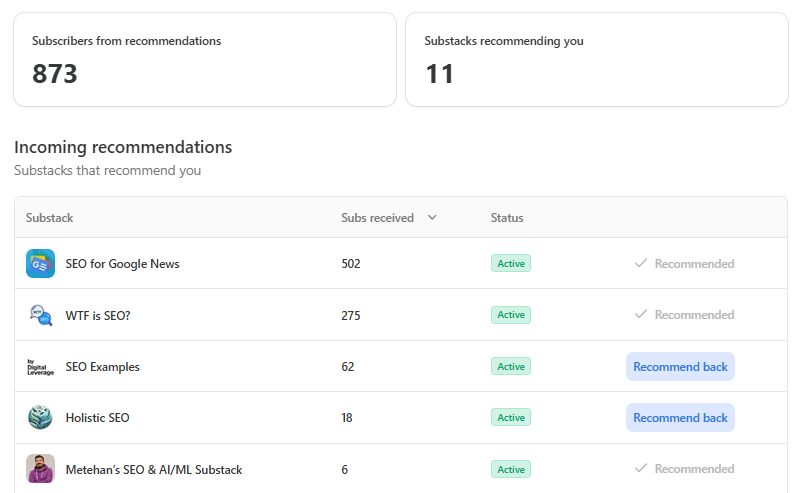
They have accounted for over 40% of my total subscribers. Admittedly mainly from Barry, Shelby and Jessie. But they are, if I may be so bold, superhumans.
And when our main driver of evergreen traffic to the site (Google) has really leant into the evil that surrounds big tech, we’ve got to be cannier. We have got to find ways to get people to share our content.
Even evergreen content.
It’s not great - but we needed a bit of a reset
If we’re being honest, a lot of SEO content has been rubbish. Churned out muck.
People are still churning out muck at an incredible rate. When what you’ve got is shit, more shit isn’t the answer. I think people are turned off. They’re tuning out of things at an alarming rate - especially young people.
It is all about getting the right people into the system. Evergreen content is still foundational here. You just have to make it work harder. Be more interesting. Be shareable.
Hopefully this makes decisions over what we should and shouldn’t create easier.