


Money, obviously. But it’s deeper than that.
Google’s market share has broadly held firm in the wake of everything AI. By held firm, I mean its share price has gone through the fucking roof and its AI offering is growing ever stronger.
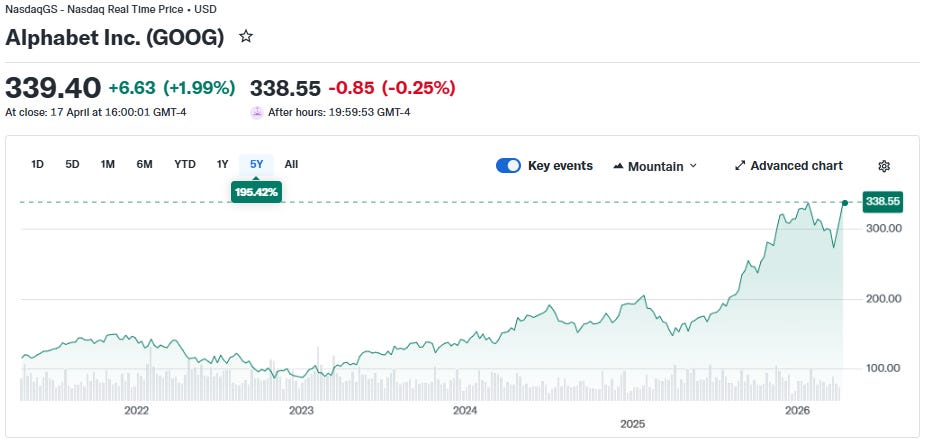
But I don’t think all is as rosy as it seems.
Google’s search product isn’t addictive - as much as they’re trying to change that. Nobody hangs out there except saddos like us. And audiences - particularly younger ones - have options.
They’re turning away from more traditional methods of information retrieval and that’s a big fucking problem. Even for Google.
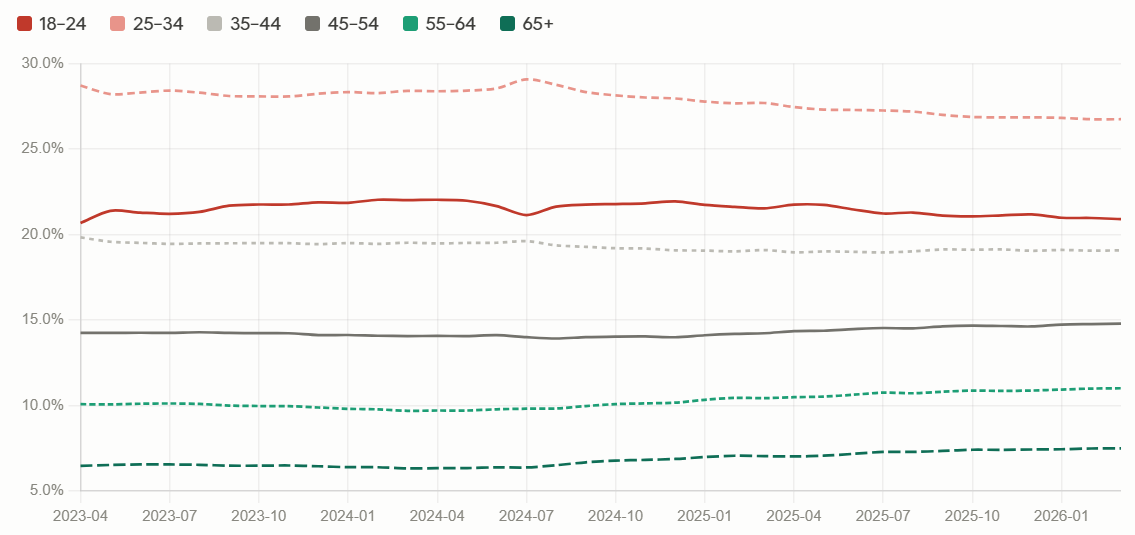
Even the search engine giant isn’t immune.
Older audiences - those already ingrained in the system - are taking up a larger percentage of their audience. The younger ones have more exciting and addictive options and best believe they’re using them to find shit.

Across every engagement metric, 18–24 year olds have deteriorated faster than 65+ users over the same period. Shorter visit duration, fewer pages per visit and a worse bounce rate. And it’s declining more rapidly with younger audiences.
Evolution for Google and the wider web is a necessity.
Although interesting to note that the 18-24 year old audience share has only suffered a small decline according to Similarweb data. The real losses were in the 25-34 cohort.
I consult on all things SEO, discoverability, the future of search, your market positioning and approach to audience targeting. My consulting website is here. If you’d like to discuss anything, you know where to find me.
TL;DR
The publishing industry and Google have more in common than perhaps either of us care to admit.
The changes Google have made are a very deliberate effort to engage with - and retain - younger audiences. Audiences who behave differently.
Engagement data on news websites (pages per visit, bounce rate and time on site) declines with audience age. Exactly the same is true of Google.
AI Mode is Google’s attempt to create a ‘sticky’ product. One aimed at younger audiences.
What’s changed?
Well, the obvious;
Google’s started answering virtually everything in its search interface
AI Mode is becoming something of a default response
Personalisation is running amok
It’s harder to generate clicks - reach and more traditional KPIs are less valuable
Consumer decisions are made before someone reaches your website
Discover has become less publisher-friendly and more social and creator-led
An increase in video and UGC in the SERPs (obviously all to YouTube and Reddit)
Just look at the SERP for almost any term, particularly middle of the funnel comparison ones.
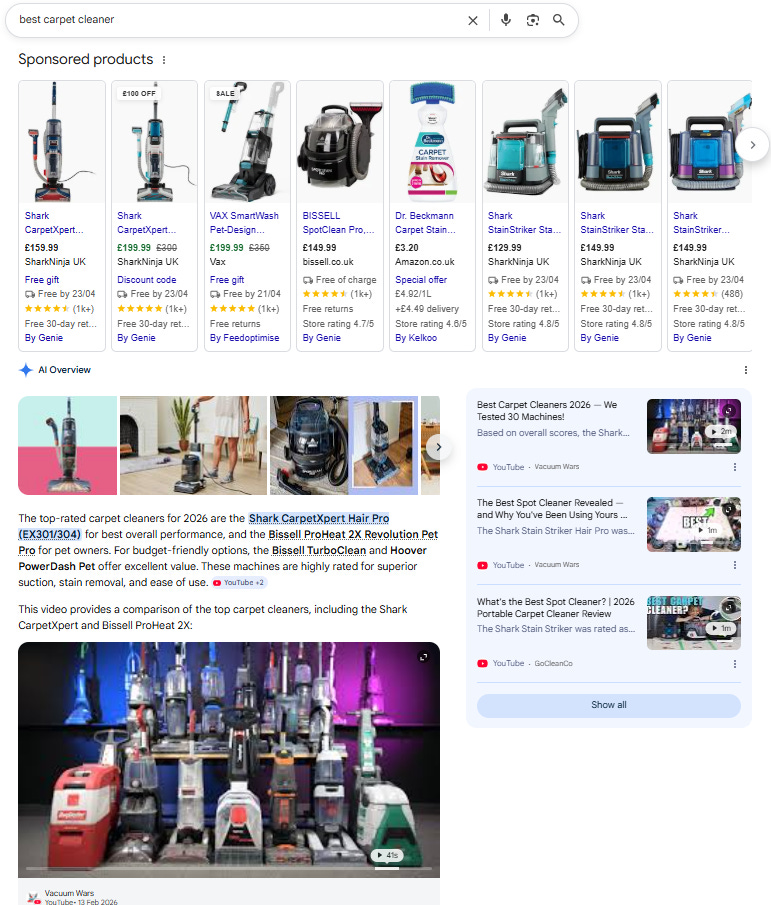
What people apparently want is not very publisher, or legacy-search friendly. What they want, is video.
Particularly the bloody youth.
Data from the UK market suggests children are averaging 2 hours and 14 minutes on TikTok per day.
Right now, it’s feasible children spend almost four hours per day watching video on YouTube and TikTok. Four hours. That same group spend just four minutes on publisher websites.
The younger you are, the more time you spend watching, the less you spend reading. So the obvious counter (from a company who primarily organises written content) is to saturate the market with video content.
Obviously, it’s very fucking helpful if you own the market.
And this doesn’t just affect organic search. Adverts are more expensive to run because AIOs have destroyed the entire search ecosystem’s CTR. So for almost all businesses, customer acquisition is more expensive.
You could say that’s Google’s way of paying for AIOs - a far more expensive SERP to generate - due to the massive computational power and energy needed to run large language models (LLMs).
But I am not going to insinuate anything of the sort. It would be incomprehensible to me that the guys who earn the entire ad and search market would make the ad side of the business more expensive to run to pay for their search experiments.
Wait a minute…

Why now?
I think this is a direct response to two things;
The 2023 Code Red Google sent out in response to OpenAI
Younger audiences shifting information retrieval methods
One is obvious.
OpenAI forced Google to move quicker than they would’ve liked. Hence all the absolute shite in AI Overviews in the beginning. Well, and sort of now. It smacked of a product that hadn’t gone through the required amount of rigorous testing.
Two is more nuanced.
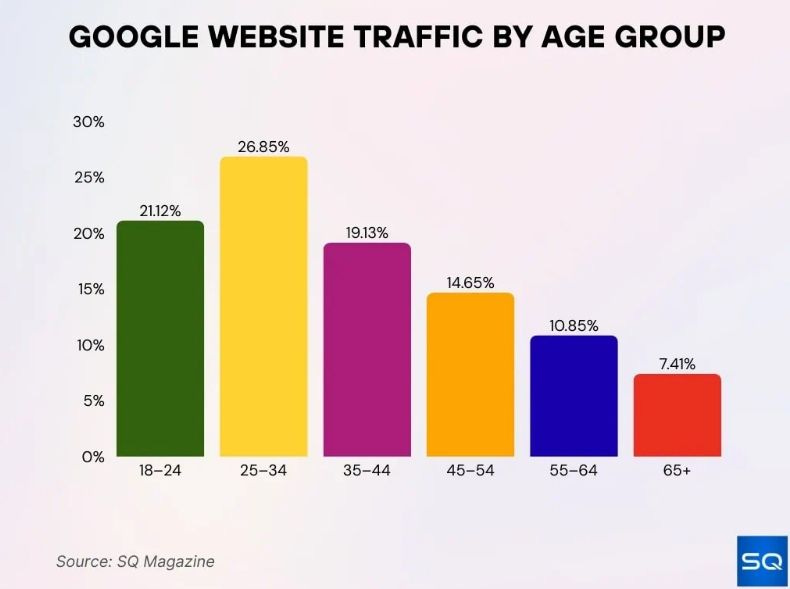
This data correlates almost perfectly with the Similarweb data I pulled. In isolation, this may not be a problem. Could be as simple as saying younger audiences will grow into it.
But I don’t think that argument works. We see it in news and publishing. We are living through it and we’re watching the decline in real time.
Younger audiences have the highest recorded screen time on record (globally, 7h 22m), but are spending less and less time reading. More on far more visually engaging, stimulating and addictive technologies.
Based on screen time alone, younger audiences should spend the most time on Google. But they don’t. I’m sure that is blatantly obvious to the Googlers.
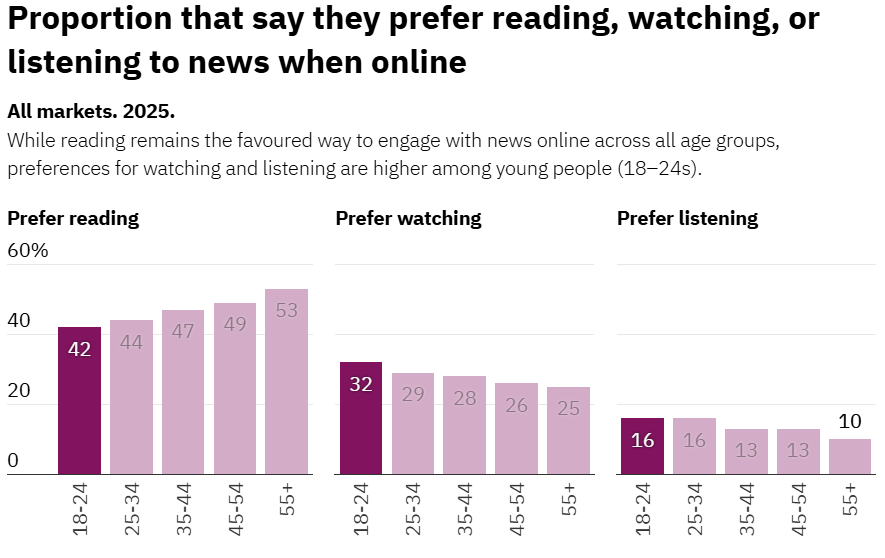
Whilst content consumption is at an all-time high, the way a person consumes content is not conducive to more traditional publishing practices.
Just 4m a day on news websites for younger audiences vs 18m for the over 55s. A 350% increase.
The same principle is true of more traditional search.
At the risk of sounding a bit too AI-y, this is a really seismic shift. Ironically not one driven by AI. Not entirely. One driven by a combination of big tech’s insatiable appetite for money, a lack of trust in more traditional brands and the rise of the creator ecosystem.
And AI, obviously.
As someone in the comments said, Google is unc. Maybe a little like news websites. Their ability to attract younger audiences has diminished.
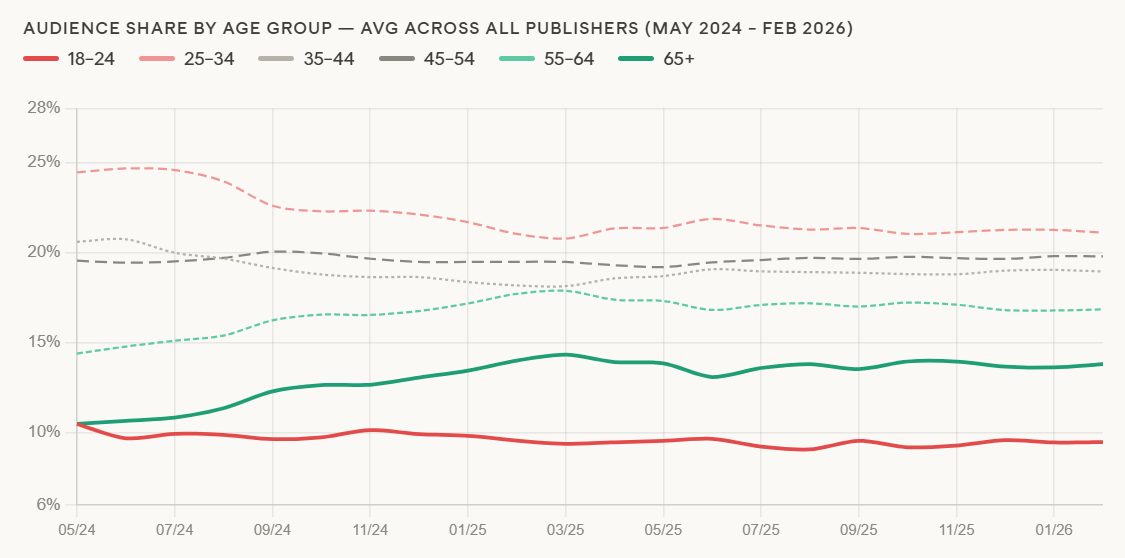
I think we can clearly correlate the changes Google has made to the reduction in younger audience share for publishers. A generation less inclined to click.
One could argue that the traffic losses so many seem to have suffered are almost exclusively from younger audiences. I certainly am.
Audiences more likely to adopt new technologies - particularly flashy ones.
There are clear parallels between news and search
Google has got richer, as has the AI bubble. All that money has to come from somewhere.
It’s everyone else who struggles.
These changes are designed to counter a younger generations shift towards people and ultra engaging platforms that encourage passive or more incidental methods of information retrieval.
Since 2015, interest in news has declined - more significantly (43%) in 18-24 year olds than any other age group. And just 64% of 18–24s consume news on a daily basis, compared with 87% of people 55 and over.
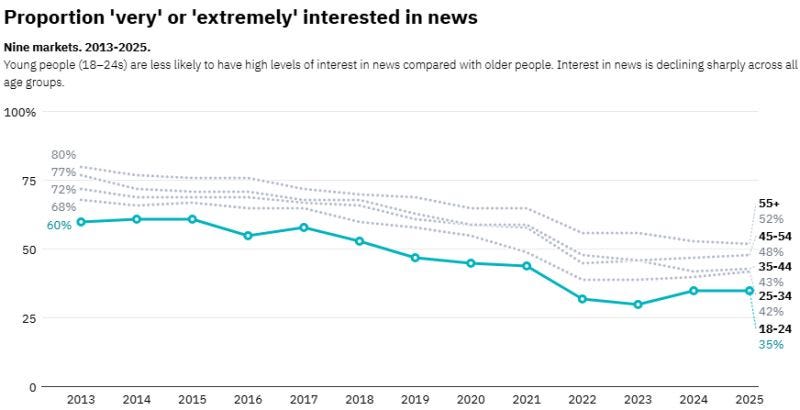
Historically, news has been sought out.
Either you browsed a news website (a real paper if you felt fancy) or you searched for it. But the discovery layer changed and search - the engine that powered the volume-driven publishing model for two decades - is responding.
Responding to younger audiences’ shifting consumption habits. Just like publishers and websites will have to.
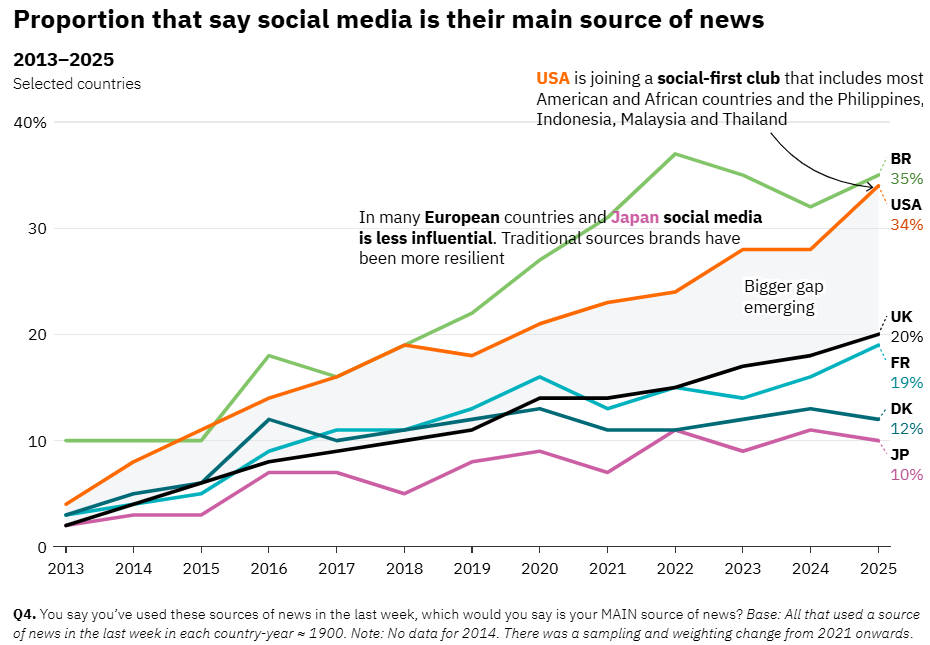
Passive consumption is just the norm now with younger audiences. This is why 44% of 18-24s see social media as main source of news, compared to just 15% of 55+.
They expect you to just appear. Algorithmic consumption has reduced the need, want and desire to actively seek something out. If what you serve isn’t delivered directly to their feed, you don’t exist.
Combine this with diminishing trust in more traditional brands, zero click searches and the rise of the creator and you can see why publishers and Google are having to change.
There have been alternatives to Google when it comes to accessing and retrieving information- Instagram, Amazon, YouTube et al - for years.
Really this is, or has been, Search Everywhere Optimisation. It has been around for a decade. It is also, IMO, why reframing SEO as GEO or some other bullshit because of LLMs is so moronic.
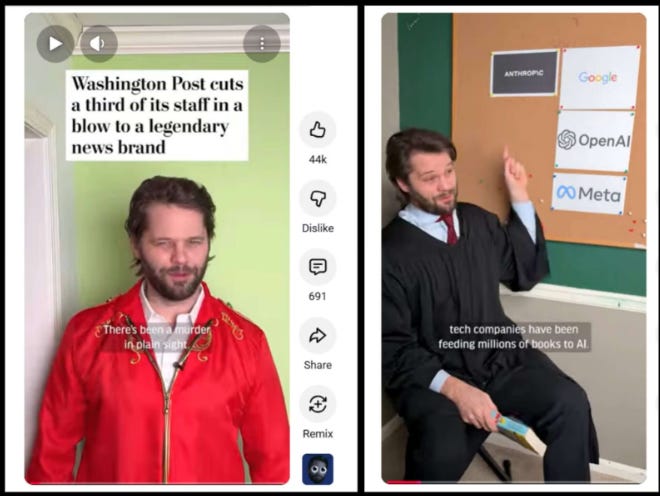
And now the individual has become the competition. The creator economy - soon to be worth $480 billion - has produced a new class of competitor: individuals with direct audience relationships, authentic voices, and none of the structural cost of a legacy newsroom.
51% of 18-24s pay attention to creators and personalities, compared to 39% who pay attention to traditional media and journalists - a 12 PP inversion.
And this is a problem for Google too. People used to use their organisational skills to satisfy all of their needs. Now it is so heavily navigational that it's hard to know how much ‘new’ stuff people really use it for.
Outside of news at least, ironically.
Will this work?
If it’s anything like news publishers, their primary concern is to continually generate new and engaged audiences with habitual products. AI Mode could absolutely be that product. Discover is their version of a social network. They are, in their own way, engaging products.
Although the low intent nature of Discover makes the advertising shit and Google not really care about it. Sad, but true.
Like Google, the engagement data for publishers tells a pretty bleak story.
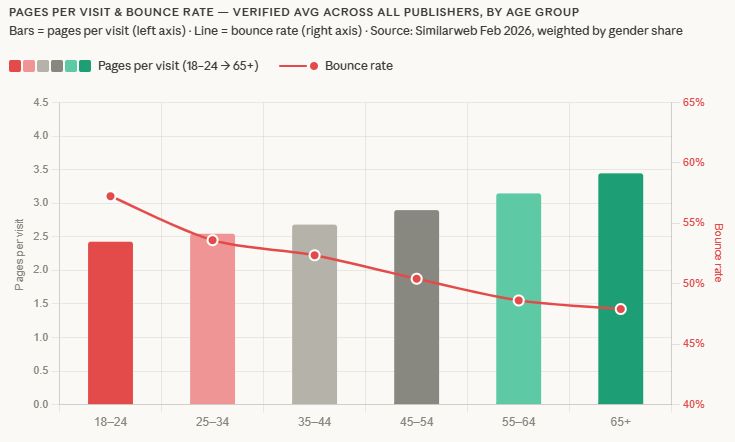
If we isolate this to the youngest and oldest audience, it’s pretty clear what is going on.

Younger audiences;
Are far less engaged with the traditional news offering than older audiences
Use these (and any) websites differently
There’s no denying that younger audiences have more diverse and engaging options. This means they use websites like news publishers differently. To fact-check. To confirm something isn’t just spurious bullshit. To scan and skim.
The same is true of Google. Less of a discovery journey. More one of fact checking and navigational searching.
Now, I’m not insinuating that older audiences get stuck with adverts and can’t use a menu. That can’t account for an extra 14 minutes of time spent on news websites.
But having watched my mother with a computer, it’s not impossible.
So, what’s the answer?
To lean into what the new generation like. Adapt and evolve.
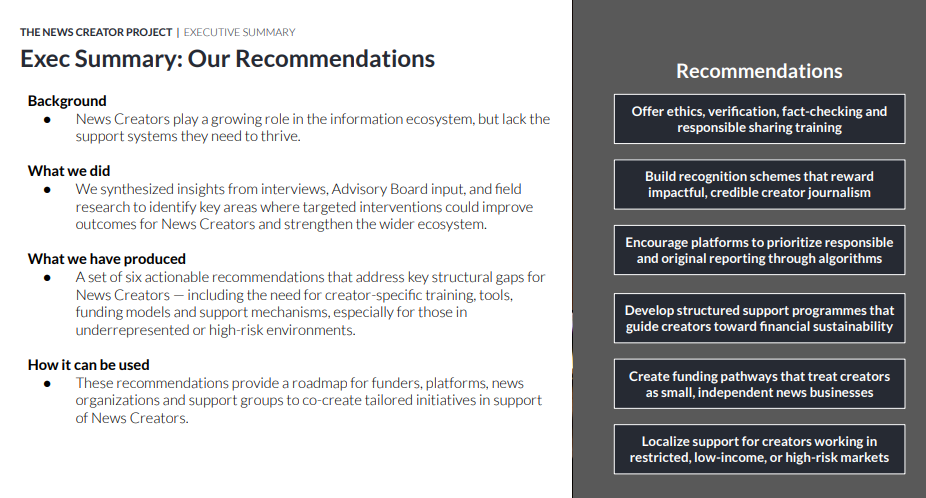
The same’s true for search (internally and externally) and publishers. If you work for Google, makes complete sense you would try to expand your video presence in the SERP and prioritise ‘quality’ UGC.
The quality part is lacking as most of the internet - as we’re finding out - is a stinking pile of shit.
But notoriously, the tide is tricky to swim against.
For publishers, it means working with creators, leveraging their audiences and ability to deliver things quickly. Differently. And creators can benefit from the trust associated with proper news organisations.
Is it that unreasonable to think Google should do the same?
Instead of abusing their position, they could start by giving people an idea of the impact of AIOs and AI Mode. I’m not a financial guru, but I reckon Google has enough money to build and foster creator and publisher programs that are not one-sided. That bring genuine value to people and the wider information retrieval ecosystem.
In this scenario, everyone benefits. When AI companies refuse to pay for publisher content, everyone loses.
LLMs lose because they have less unique, human-created, quality content to train on
Publishers lose because they are forced to suppress their visibility and don’t get any money
Users lose because the end output isn’t as good
Model collapse is on the horizon. AI learning on AI falsehoods. A repetitive cycle of shit. Joyous.
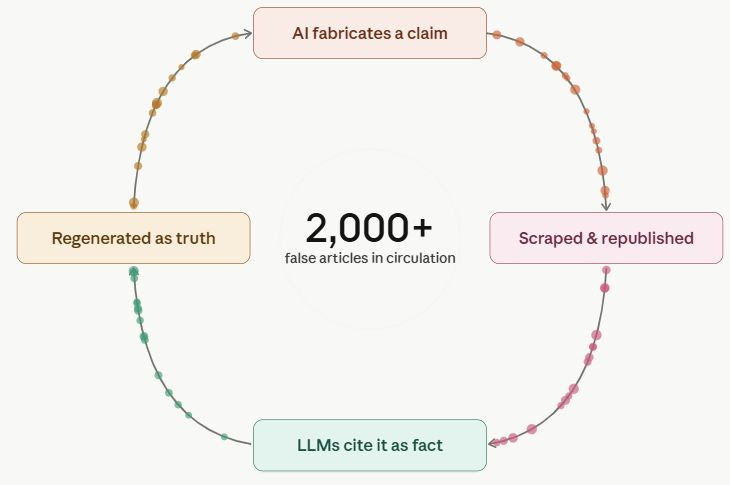
These companies should invest in the ecosystems that built them. Particularly Google.
For publishers,
Build owned channels. Get the fuck away from relying on big tech
Create brilliant, unique journalism
Supplement it with habit forming products - puzzles being the obvious example
Build and sponsor audio and video programs that reach your intended audience
Implement channel-specific strategies
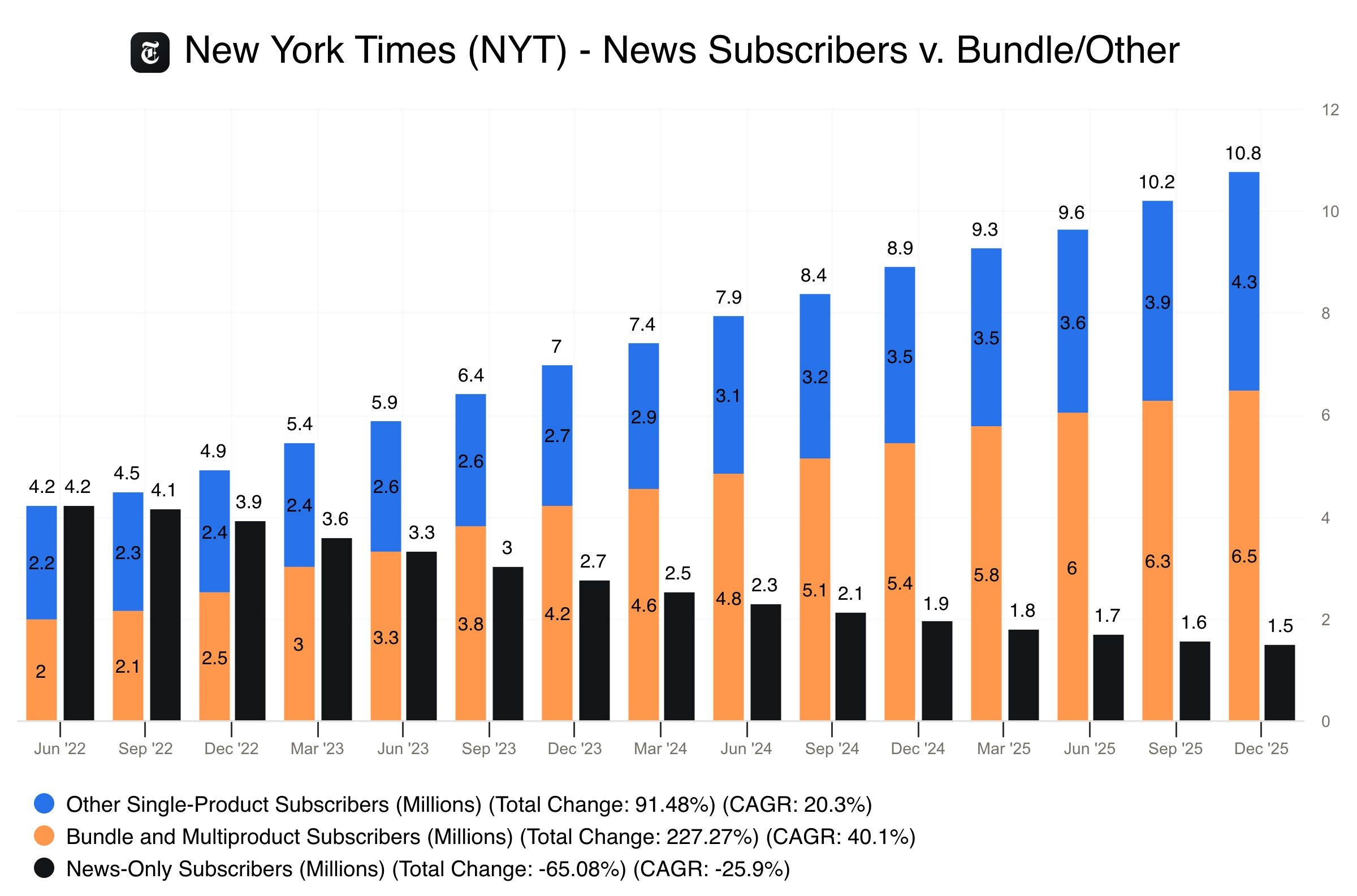
Even the NYT don’t rely solely on subscriptions from written content. Not by a long shot. It isn’t enough.
Final thoughts
Unfortunately I think the recent spate of job losses in the publishing industry is just the beginning. Bauer, the BBC, The Washington Post. It’s not UK or SEO-specific. 100k roles are becoming 70k ones. Teams are shrinking. And there are real world ramifications.
We are not in a good moment. Some of this can be attributed to AI. But I think more of it is due to longer-term economic difficulties, audiences switching off from traditional news and things like the Site Reputation Abuse update destroying much needed revenue lines overnight.
It is fucking hard to make these businesses profitable. Google doesn’t have that problem. But they’re not immune to changing behaviours and becoming yesterday’s news either.
Should you be enough of a psychopath, you can follow the job cuts via this updated Press Gazette article.
