


I wrote an article about auditing publisher websites last week and it took a little piece of my soul. Like a horcrux, but without me being a spectacularly evil wizard hellbent on world domination. Allegedly.
I argued that SEO auditing should be broken down into four parts:
Technical SEO
Content
EEAT
Entities
I think almost every concept required for modern information retrieval is included within the above four themes. Outside of wider marketing (which is arguably the most important facet of ‘optimising’ for LLMs thanks to its impact on training data), everything you should be doing as an SEO should align with discoverability.
And Entity SEO is not a new concept. Google has a long history with understanding and disambiguating entities (people, places, organisations et al). Google’s Knowledge Graph has been around for 15 years and is quite literally a database of entities.
The content around the entity became more important than ever. Things, not strings. Old school.

“Search engines and AI systems have to build a picture of who you are from fragmented evidence across the web. Your job is to make that picture as clear, consistent and well-supported as possible.”
Me, just now
This is as close to GEO as I will get.
TL;DR
Entity SEO isn't new. It's making sure modern information retrieval systems know who you and your brand are with clarity. It maximises your visibility.
Control your owned properties. Make sure what you say and what you do matches how you want your brand to be perceived.
Earn quality mentions. Influence the sphere most appropriate for your audience and your product positioning.
Build an entity map. This will help you find errors and inconsistencies great and small across wide-reaching corners of the internet.
As always now, if you’d like to listen my dulcet tones rather than read, that is your want and right:
What is entity SEO?
Entity SEO is the practice of reducing ambiguity around the people, places, organisations, products, events and topics that really matter to your business. Google's Knowledge Graph is the most obvious and accessible example of a system that represents entities and their relationships.
The on-page content, the internal and external links, the navigation and your owned and earned consistency (and scale) are of critical importance.
Everything you say about your brand needs to be accurate. What other people say about your brand needs to corroborate this. You are trying to control the controllables, and ensure the right entities are talking about your brand.
That second part is more marketing specific and something that sits outside of most SEOs remits. I like the idea of having a Director of Marketing in control of the inputs and outputs here.
Or a Director of Discoverability if you wanted to be fancy.
Why does it matter?
If Google and LLMs can't confidently ‘understand’ who you are, it's harder for its systems to correctly interpret and connect the signals around your brand. You need on-site consistency and third-party presence to provide real clarity.
An assurance to a system tired of bullshit and bullshitters that you are who you say you are.
Metrics like branded search volume have always been important to track. Direct traffic to specific sections of your site too. You want to understand and establish where you have real user demand.
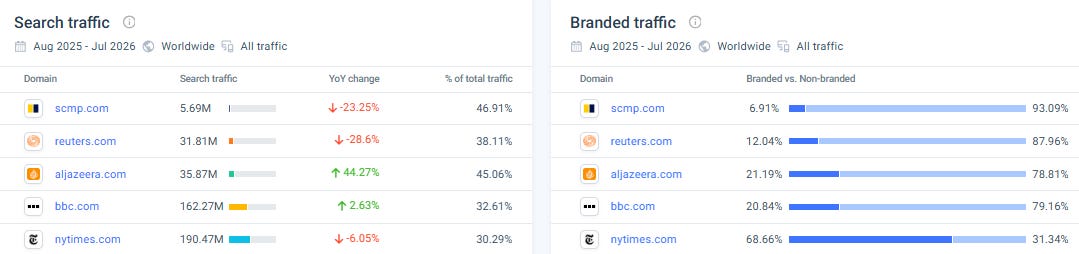
You should really understand what types of places or events you have real authority in in the eyes of our machinated overlords.
And yes, while AI systems are not exactly world-leading when it comes to filtering out spam (see ChatGPT using site: search modifiers for brands it ‘trusts’), this isn’t going to be the case forever. So stop pissing about.
News is an entity edge case
When users search for the news, they search with short-tail entities. They hear about a story and search for the person, event or place associated with it. It’s short-tail and relatively lazy.
Top Stories - a news SEO’s primary signifier of success - is dominated by entities. Headlines, opening paragraphs, images and the wider makeup of the page needs, nay demands, an entity. A focal point.
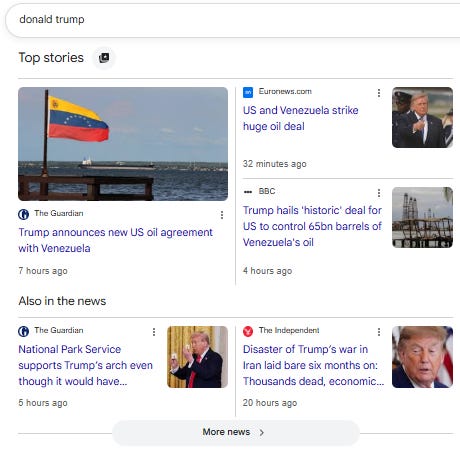
You’re trying to establish what this story is about as quickly and efficiently as possible for a crawler that may crawl your news article once and then only again once the spike in demand has passed.
It’s why it’s so important to be accurate on first pass. Google’s news crawling system may give you one chance.
The content and mentions publishers generate is what positions you as a brand. If you keep creating horse racing content for betting-specific purposes (I’m not pointing any fingers here), you should think about whether that relationship may be doing more harm than good.
An entity SEO framework you can follow
I don’t mean in the sense of ‘even someone like you can follow this.’ Although this should be simple. I mean it from a more tactical perspective. You can audit your own entity presence across owned and earned properties and try to take action.
This is particularly important for smaller brands and publishers. It’s not like the BBC or NYT have to worry about whether someone spells their brand name wrong. But if you are (or have) a less established brand - personal or organisation - then this type of consistency matters.
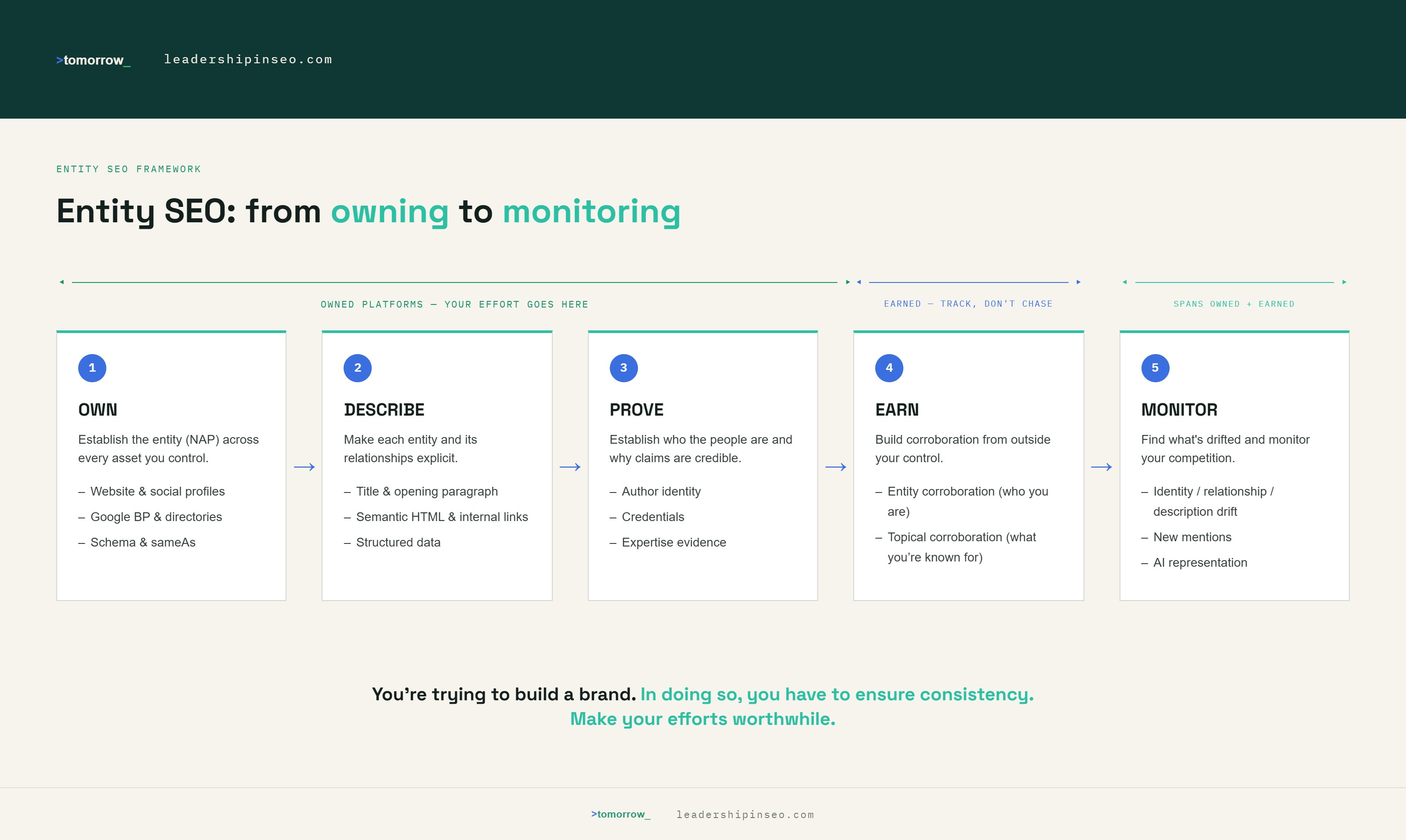
Everything we classify under Own, Describe and Prove fall under your control. They are all editable properties.
If you remember working in SEO as a junior ten years ago or more, you’ll remember the long list of mentions someone would send you to turn into backlinks. In my experience and humble opinion, this was a completely fruitless exercise and a complete waste of time.
In the spirit of that, I suggest you focus almost all of your time on your owned properties. The part of your digital presence you can fix without sending snivelling, guaranteed to be ignored emails.
A spreadsheet audit (paid)
You can, of course, build an entity audit and framework based on this article. But for paid subscribers I’ve built a sheet you can use to define:
A consistent brand ‘Source of Truth’
A full asset inventory split into coverage and consistency
An entity corroboration vs topical corroboration checklist
A priority fix column
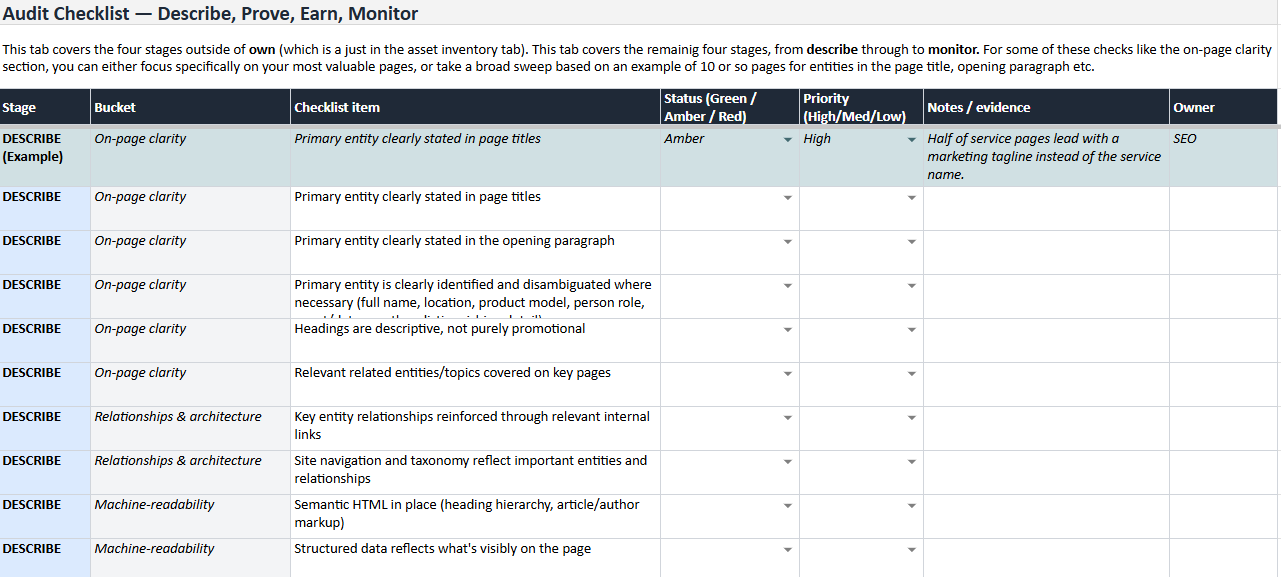
Should you wish, you could absolutely build this spreadsheet from the article. But I will add something tangible and practical for paid subs each month to help solve problems.
Own - establish the entity across controlled assets
Make a list of everything you own. Editable assets.
Website (About Us pages, Contact pages, privacy policy, footer et al - don’t forget structured data and
sameAs)Your corporate website too
People’s profiles
Social channels
WikiData and Wikipedia (if applicable)
Marketplaces or platform profiles
And make sure your description of your brand, NAP (Name Address Phone Number, shout out old school local SEO), leaders, contributors - everything that should be consistent should be consistent. Your links all point to the right endpoints.
Before starting any grandiose plan for world domination, make sure your owned properties and the information on them are consistent and accurate. We could colloquially call this entity hygiene. Look, it’s unlikely to make a dramatic improvement, but you’ve got to start somewhere.
All of it is ambiguity. Ambiguity isn’t just something you prevent. It’s something you clean up. It removes entity drift.
Before diving in headfirst, worth making sure you know what the correct version of your brand is. Probably a bad idea to start making changes without knowing what godawful version of your company the comms team and C-suite want to establish.
Describe - make the entity and its relationships explicit
We can think of describe as more of a page-level property.
Does each page explicitly target the right entity?
Does the surrounding information back this up credibly?
Does your header structure answer related questions?
Do you use internal and external links with consistent anchor text?
Do you answer topically relevant questions?
This is all about understanding and matching user intent more effectively than anyone else. The same consistency you apply to your brand you should apply to your most important pages.
You’re building relationships. Between words, sentences, paragraphs, authors and brands. A big stinking interconnected mess. And your organization schema should define who your brand is. Article and person level schema corroborate information about the individual page at hand and sameAs schema joins the dots between your brand.
On large sites internal linking is more often than not one of the best places to make scalable improvements. You want articles about mortgages to link to the mortgage tag page. You want your tag page to house the hundreds or thousands of articles you have written on the topic to be findable. Ditto your author page.
Make your experience explicit.
Prove - establish who your brand and people are and why they’re credible
Right, you’re working with someone who’s won multiple awards, has 100s of thousands of subscribers and is mentioned consistently in your sphere of influence. Or desired sphere of influence.
a) Do you think it would be good to run some product marketing and to shout about the fact you both trust each enough to work together?
b) Or should you just ignore everything and keep ploughing on like it’s 2015 and everything will be fine?
If you answered b, I suggest a different career path.
Every person who matters - writers, founders, executives, named experts - needs one consistent, verifiable identity: an author page linked to a real LinkedIn profile, a real publication history, structured data validity, contact link(s) and a bio explaining who they are and why they’re trustworthy.
If they have credentials, show them. If they have won things, highlight them. If they have a Masters in Economics and have worked for Bloomberg for 10 years, that might be useful for your audience and information retrieval.
There are always small wins here. Highlighting how you conducted research and evidence for an article, what your testing protocols are like - really just solid EEAT-level applications are immensely valuable.
Earn - mentions and links that corroborate your entity salience
You don’t get to fully define your own entity. Some little wretch on Reddit or deep in the YouTube comments gets a say now too thanks to LLMs. Businesses can be made or destroyed through false, unverified information weaving through the sewage of the internet.
So you need to earn good stuff. You cannot fake this. Not sustainably. Not without leaving breadcrumbs that will eventually catch up with you.
Entity corroboration asks who you are - accurate brand mentions, consistent third-party descriptions and information, correct directory and association listings. It defines the basics.
Topical corroboration asks what you’re known for - expert commentary, interviews, citations, bylines that consistently connect you to the subjects you claim to specialise in. What you do - both good and bad.
It’s all very well claiming to be the world’s foremost experts on Bitcoin. But if the rest of the world sees you as a chef from Solihull, you’re swimming against the tide.
This is why mentions are becoming more valuable than ever. SEOs have been gaming the linking algorithm for years. Mentions are much more readily available. More difficult to accurately define, but better evidence of your reputation.
Monitor - see where and what you and your competitors generate mentions from
It might help to frame entity SEO as an ongoing discipline rather than a one-off project.
The marketing you do and influence you have in specific industries tend to dictate the scale and relevance of your mentions. You want to see what’s working (and maybe more importantly what’s not) for the industry or topic you value and apply those learnings.
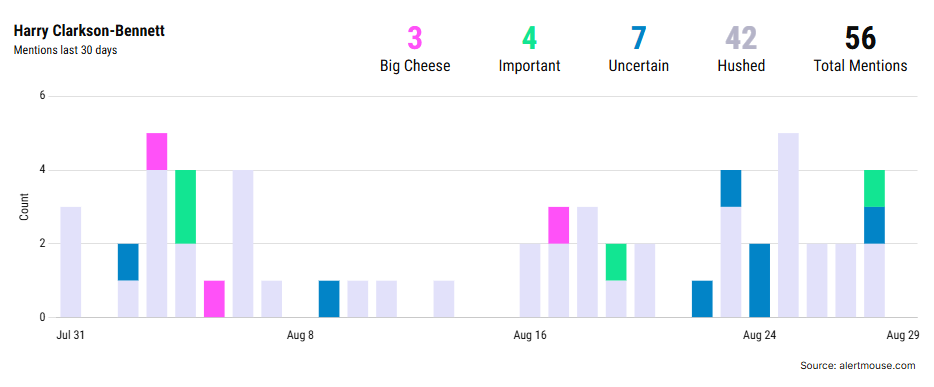
Over time, you’ll notice that your identity as an individual or a brand can drift. As the volume of your mentions and citations grow, are they kept up-to-date? As employees leave the business, is that updated on the corporate site? Are third parties describing you appropriately?
All of these identity, description and relationship issues can be bundled into a concept called entity drift. That is a foundational concept of ‘GEO.’
LLMs are as good a representation as you can get of how the wider internet views you - because they scrape fucking everything.
So monitor how different models view your brand over the course of a few days or weeks and see whether it’s how you want to be perceived. You can take action based on these findings.
This helps you build an entity map
An entity map (see Dixon Jones’ post here) is a structured representation of the important entities associated with your organisation and the relationships between them.
If you’re serious about entity SEO (who the hell isn’t), then this is a really useful exercise. It forces you to confront how you are perceived vs who you think you are. A terrifying thought.
At its simplest, start with your organisation and map the people, products, services, locations and topics connected to it. Then identify the evidence that supports those relationships.
How do I build one?
You can build a pretty comprehensive one just with Search Console query and page-level data. Keep it simple to start with. Plenty of time to over-complicate things and get frustrated in future.
Identify the primary entity. Who or what are you mapping?
Identify the connected entities. People, products, services, locations, topics, organisations, events.
Map the relationships. Founder of, employee of, based in, specialises in, writes about, produces, owns.
Attach identifiers and evidence. Official URLs, LinkedIn profiles, Wikidata IDs, author pages, relevant sources.
You should end up with something like this.
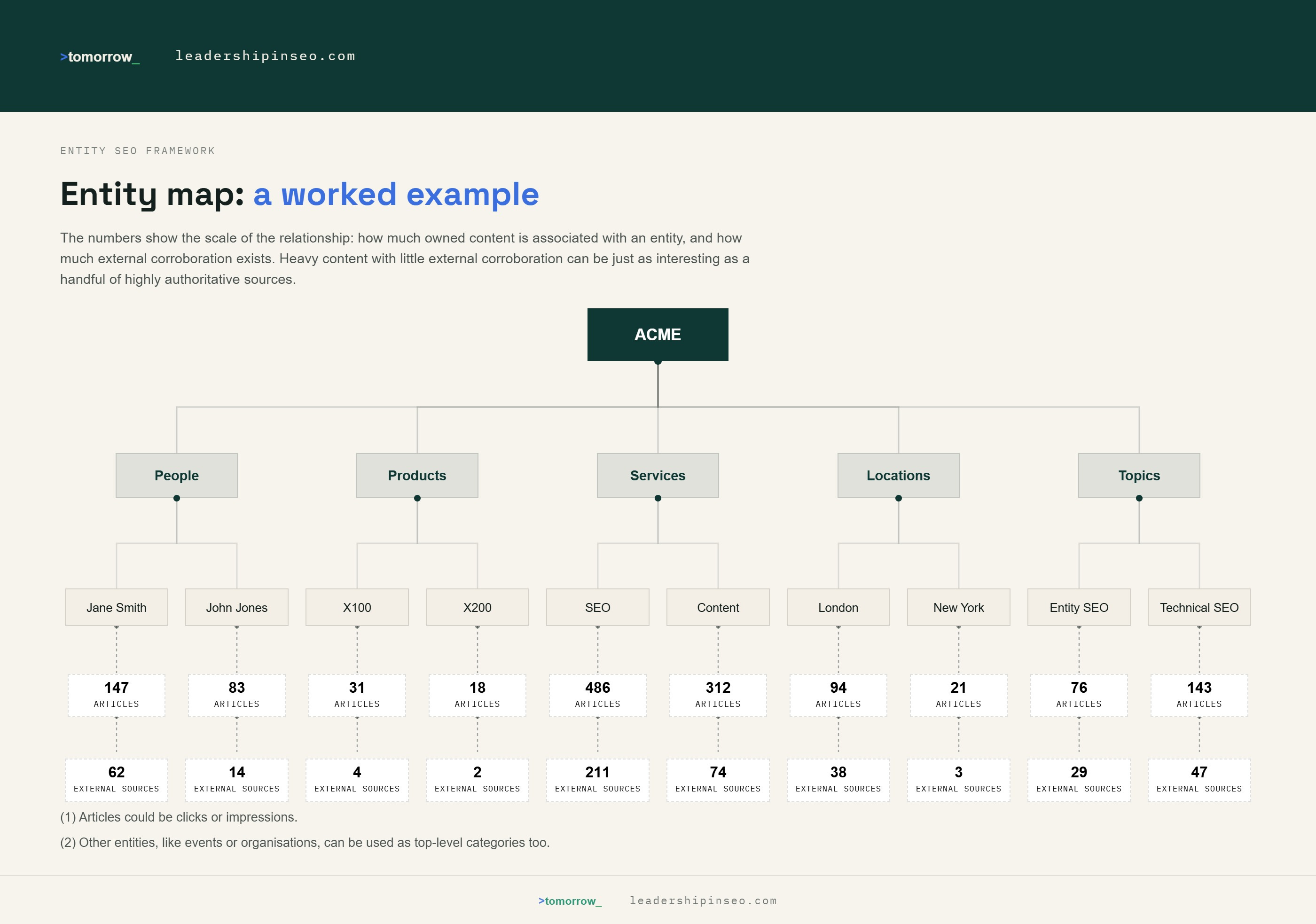
I guarantee you this is not just a useful exercise for traditional and AI search. It’s something you can put in front of senior people and marketing/brand leaders and show them your current positioning.
Entities and online relationships are the foundations of brand perception. You can run this same exercise using Similarweb or Ahrefs data to build a picture of where you sit vs your competitors.
Pro tip: Filter your Search Console data by country and create an entity map per country showing how you are perceived in different locations. It is rarely as you’d expect.
Extracting entities at scale
LLMs and their APIs are excellent at this. NER (Named Entity Recognition) is a well-established NLP task that can provide fast, repeatable entity extraction at scale. LLMs can then help with normalisation, disambiguation and relationship extraction. Brilliant if you trying to skim through 50k rows of queries or extract information from page metadata.
If you just want to use query data from GSC, you can set a model up to extract and classify entities into people, places, organisations et al. If you need to extract information from an article, I suggest running the pages through your crawler of choice, extracting key metadata (h1, meta description and the opening x characters if required), identifying the entity and disambiguating it based on the surrounding text.
How do we know Google and AI systems care about this?
Because Google has a 15 year+ history of doing so. From launching the Knowledge Graph to updates that led to wider semantic understanding of surrounding content (Hummingbird and Bert) through to understanding multimodal content formats (MUM).
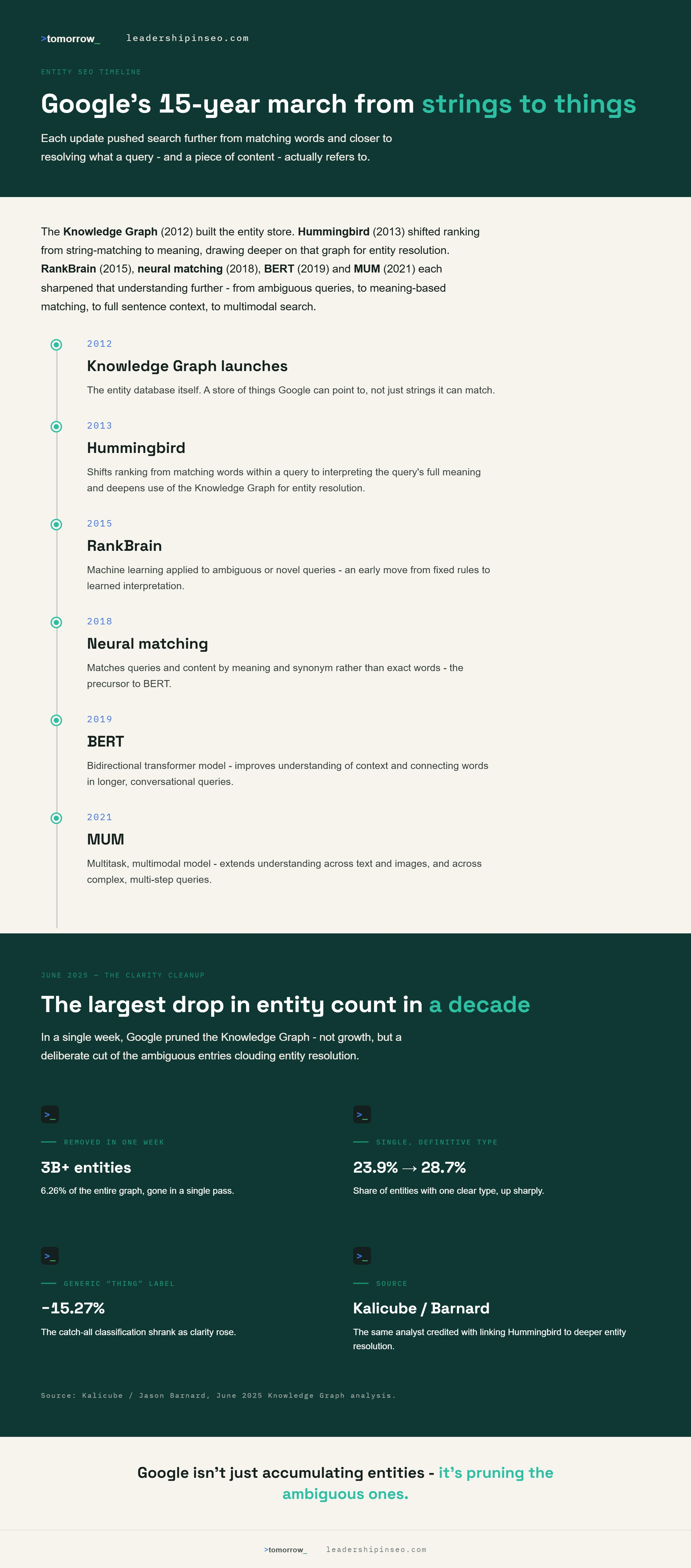
In 2025, Kalicube reported that more than three billion entities disappeared from Google’s Knowledge Graph during a major June update. Kalicube interpreted the change as a move towards greater clarity and less ambiguity.
Google is making page indexation hard. It’s raising the bar for what qualifies as part of the Knowledge Graph. Quality, not quantity wins in this slop-filled era.
It’s a hugely important database - one that’s incredibly difficult to replicate. One your brand, products and people need to be in.
“Just because you can use AI, it doesn’t mean you should.”
Mark Williams-Cook
In summary
Audit your owned properties, make sure you’ve accurately described what you do and who you are, prove your people are real and do stuff that earns high-quality, highly relevant links and mentions.
This has literally been the foundations of SEO for nearly 15 years. Just because you haven’t done it or had to apply it anywhere, doesn’t mean it doesn’t matter. Don’t assume the internet understands your brand. It’s a shitshow out there.
The good news is shitshows are highly auditable:
You need to know what your brand is actually supposed to say about itself
Check whether it's saying that consistently everywhere you control
Then go and find out whether anyone else agrees with you
This is high-level GEO wizadry. No mere mortal could understand this and I won’t hear a word otherwise.
The entity consistency problem you're describing is brutal at ecommerce scale, where the same SKU often carries three or four different names and attribute sets across the website, the Merchant Center feed, and marketplace listings on Amazon or eBay. Retailers rarely fail at this because they don't understand the concept, they fail because no single team owns the product data across those surfaces, so the drift is structural rather than accidental. In practice, fixing it means treating the feed, not the website, as the actual source of truth for the product entity.
The entity map section is the most actionable part of this, and I'd split it in two. What you describe, mapping the primary entity, its relations and the evidence behind them, is an internal diagnostic you can build from GSC raw data today. Dixon Jones' EntityMap is a different animal.
Both are worth doing, but only the first pays off "now". As far as anyone has documented, there is no empirical evidence that major search engines (Google, Bing) or commercial LLM crawlers (OpenAI, Anthropic, Perplexity) natively ingest or give structural weight to entitymap.json or entitymap.html. While I can see initial access requests, including from Apple, in the server logs of some projects, I wouldn't call that evidence just yet.