


Rightly or wrongly, publisher discoverability has been taken care of by search for years.
Traffic from Google was and is so valuable - and in recent times so vast from Discover - that reach has never been a problem. Not until very recently. As behaviours, platforms and the internet morph into something less website-friendly, business models and publisher indispensability has been called into question.
Today, discoverability is much broader. It’s being won by brands and (predominantly) individuals who can move fast and show a little personality. A touch of ankle. Calf if you’re very lucky.
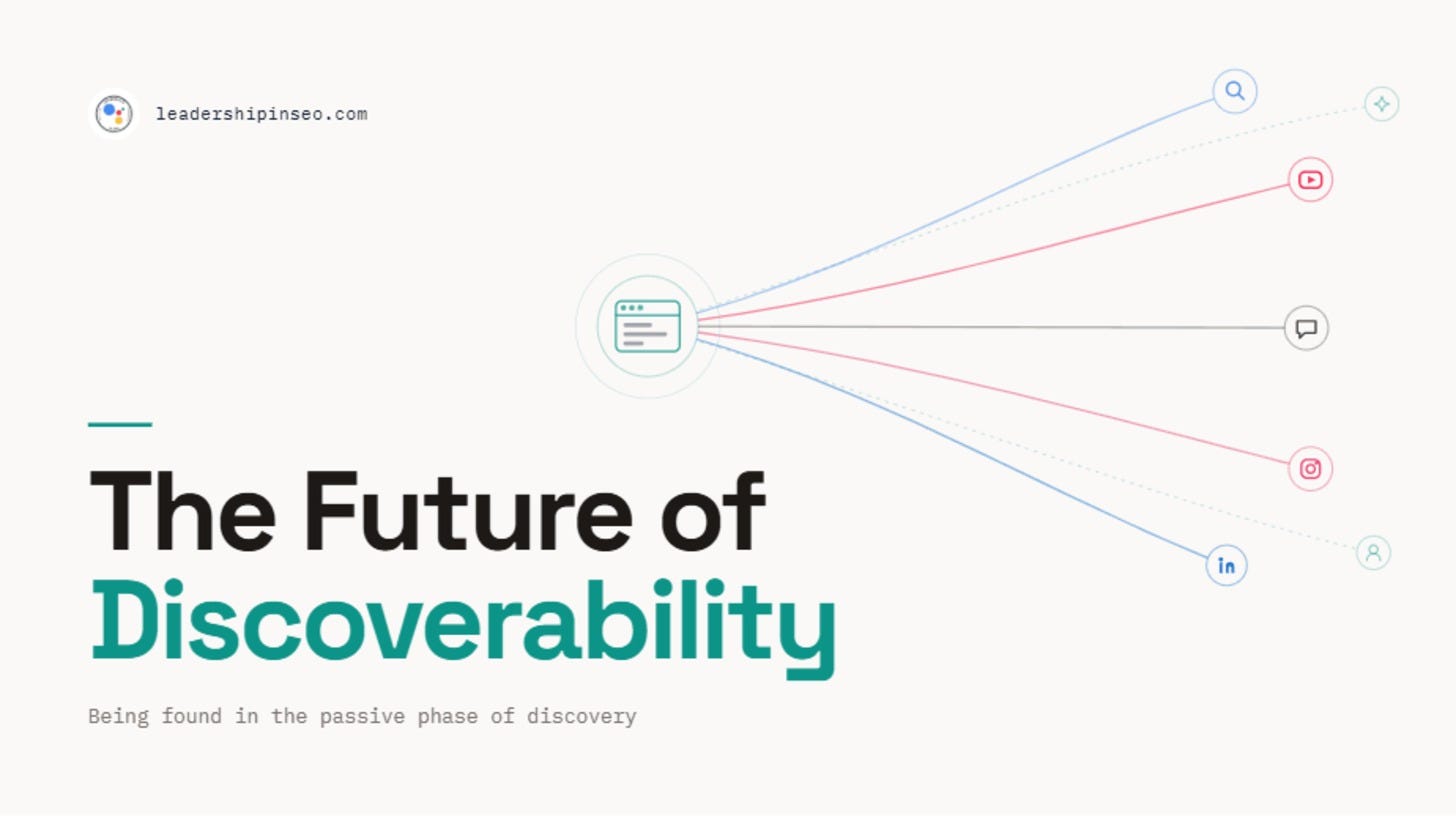
Today’s audiences discover publishers and people through social platforms, search, AI assistants, recommendation engines, Google Discover, podcasts, newsletters, creators and countless other touchpoints.
They are less loyal and less trusting of news than ever before. But they love people and authenticity. To grow, publishers need to own the passive phase of discovery. And we need to understand how to audit them.
TL;DR
Discoverability is the premise that people encounter your content wherever they spend time
There are three phases of discovery: passive, active and owned. Getting users into the owned phase requires consistency in the passive and active ones
Engaging a user and building a meaningful relationship is a challenge that cannot be solved by search alone - that has been true for some time
According to new research, up to 86% of Google clicks are discovery-led (primarily desktop). Google is still a foundational force at the top, middle and bottom of the funnel
If you’d rather listen to me talk about discoverability, the choice is yours:
I consult on all things SEO, discoverability, the future of search, your market positioning and approach to audience targeting. My consulting website is here. If you’d like to discuss anything, you know where to find me.
The definition of discoverability
Discoverability is the probability that the right person encounters your content at the right moment, regardless of platform, source or whether they were even looking in the first place. It’s about solving the ‘problem’ the user has at the right time.
The difficulty - or maybe more precisely one of the difficulties - is meeting the user in their passive phase of consumption. When they aren’t looking for your brand. They’re looking to be inspired, but they are almost unaware that’s what they’re looking for.
Something or someone has to create something good enough to break the scroll.
Publishers are competing slightly less directly for rankings and more for moments. Moments where they can directly engage the user and attempt to influence them. Habits start small.
Discoverability has fundamentally changed
Not only has it changed - it’s been changing for the best part of a decade.
Previously search was the entry-point for users to your brand. The research and comparison stage of the journey was fundamentally search-led. Now social changes have led the charge on more passive consumption of content through algorithmic feeds. Unless you appear there you are largely invisible - particularly for younger audiences.
And AI summarises commodity informational content better than any brand or human can when it comes to ease of use and scale. So publishers are unlikely to win the war when it comes to convenience.
But why now?
I think there are four key reasons. All of which can be bundled under consumption preferences and convenience.
1. Audience behaviour has changed
Behaviours have been changing for a decade or more. Search no longer has a vicelike hold on each stage of the customer journey and is just not as effective as AI for research or social media for influence and engagement at scale.
People have options and habits have changed. Teenagers spend just four minutes a day on publisher websites compared to 19 for over 55s and younger audiences prefer watching or listening to reading.
Publishers are less habitual than ever before. Direct traffic and branded search are dropping across the board because users have more stimulating, individual-led options.
According to this latest iPullRank study, 52.3% of all 18-24 searches end without a click. For those in the 55-64 age bracket, this figure is just 42.7%.
But the older audience is seven times more likely to click on an advert. Gen Z are less trusting and more discerning.
2. Platforms have become walled gardens
LLMs are built to answer queries internally, traffic to publishers from social channels has been dropping for years and search is following suit. The longer you stay in an ecosystem, the more valuable you are to that ecosystem.
Big tech’s goal is to identify their moat (usually big data), open the gates and then close them for monetisation. There’s a reason platforms like LinkedIn suppress posts with links in them.

The moment you leave their system, your value declines.
3. AI has expedited the shift
Their restructuring of the web into a single answer engine interface is significantly more convenient than sourcing the answer yourself. And many publications have made a living off ad-revenue with information that didn’t warrant a click.
Google has been trying to stamp down on commodity content, content that lacks expertise and over-optimised content that games the system for years. AI Overviews have eroded search’s value exchange and answer engines dominate in the research phase.
The top of the funnel has become less valuable click-wise. Whilst this traffic was low intent, the volumes were so high it has been extremely profitable for publishers.
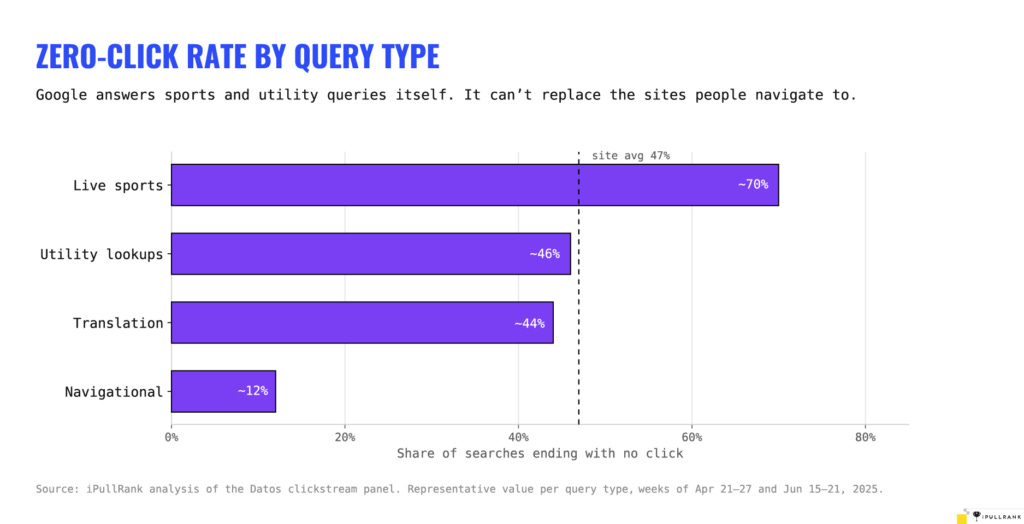
In the same study from iPullRank, the clickstream data showed that live sports had the highest zero-click rate of any content type.
The SERPs are so rich with sports widgets, weather widgets and calculators et al (see utility lookups in second place) - and have been for some time - that it’s not just AI Overview related.
4. The rise of the individual
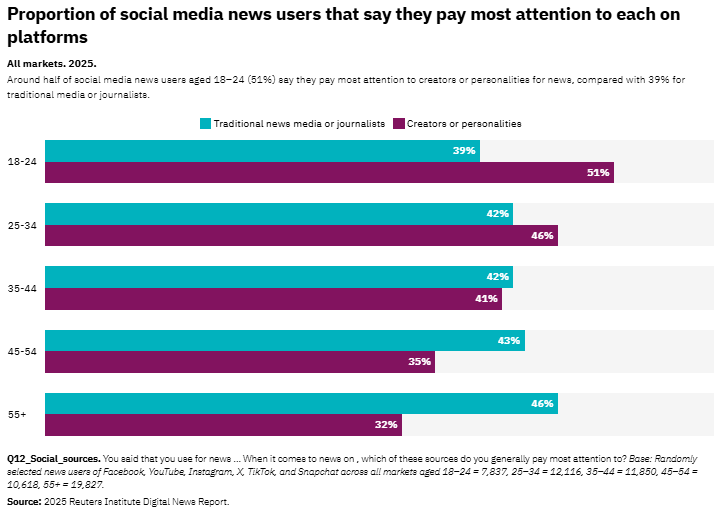
People trust people, not brands. The younger you are, the more strongly this statement resonates.
The rise of social accounts and videos in Discover is not an accident. This is Google’s most personalised platform. One where no two users have exactly the same experience.
“Recently, we’ve started showing more social media posts in Discover in general, and that’s not just from X, but also from Instagram, TikTok, and several other sources.
We’re doing this because we found that users enjoy content written by humans, or essentially shorter versions of content…”
John Mueller, 2026
I would expect Discover to become even more video and social-led as Google attempts to build its own creator-led platform.
One that becomes more friendly for advertising and less so for publishers.
Publishers that focus on turning individuals into influencers can still profit from this iteration of the platform. Traffic won’t be as plentiful, but real value will still be there. It could become more valuable for publishers who lean into the individual.
You can watch or listen to me talk about the shift in Discover here:
The future of search and publishing is discoverability
Search Everywhere Optimisation is all about discoverability. Google’s latest release gives you visibility over your social accounts in search. The latest in the line of updates that show how important wider visibility and expertise are.
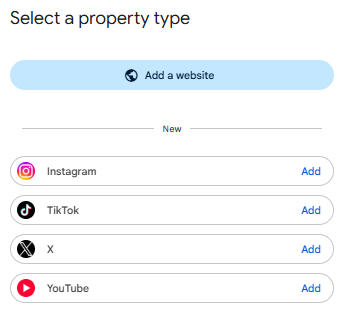
You cannot build a brand through search alone and any ambiguity is penalised. This is an evolution of EEAT and a damn good one.
It’s about being present across multiple channels, with human-led expertise that builds the prominence of your brand, improves entity relationships on the internet and disambiguates your brand’s presence.
These are two sides of the same coin. Good SEO is good discoverability - but you can’t stop there. (This is also good GEO, obviously).
Google has trusted brands for decades because people do. A quality, trustworthy brand is one of the hardest things to manipulate. Backlink exchanges and fake reviews are not a solution. Neither is scaled AI content.
You need the relevant presence across search platforms; Google, YouTube, TikTok et al, everywhere that has a search function, third party sites of influence in forums like Reddit and review platforms and in the community itself.
Places where your audience is actually influenced.
What we think of as traditional search is being replaced by AI-interfaces. But it’s also being replaced by a creator-led universe. As Google attempts to create a loyalty ecosystem, its attempts to surface more creator and social-first content haven’t gone totally under the radar.
The discoverability framework
The old customer journey isn’t broke, but it needs updating. Particularly for publishers who primarily sell information and opinion as primary products.
Our model takes you from passive through to owned discovery. The right person, need, format and time.
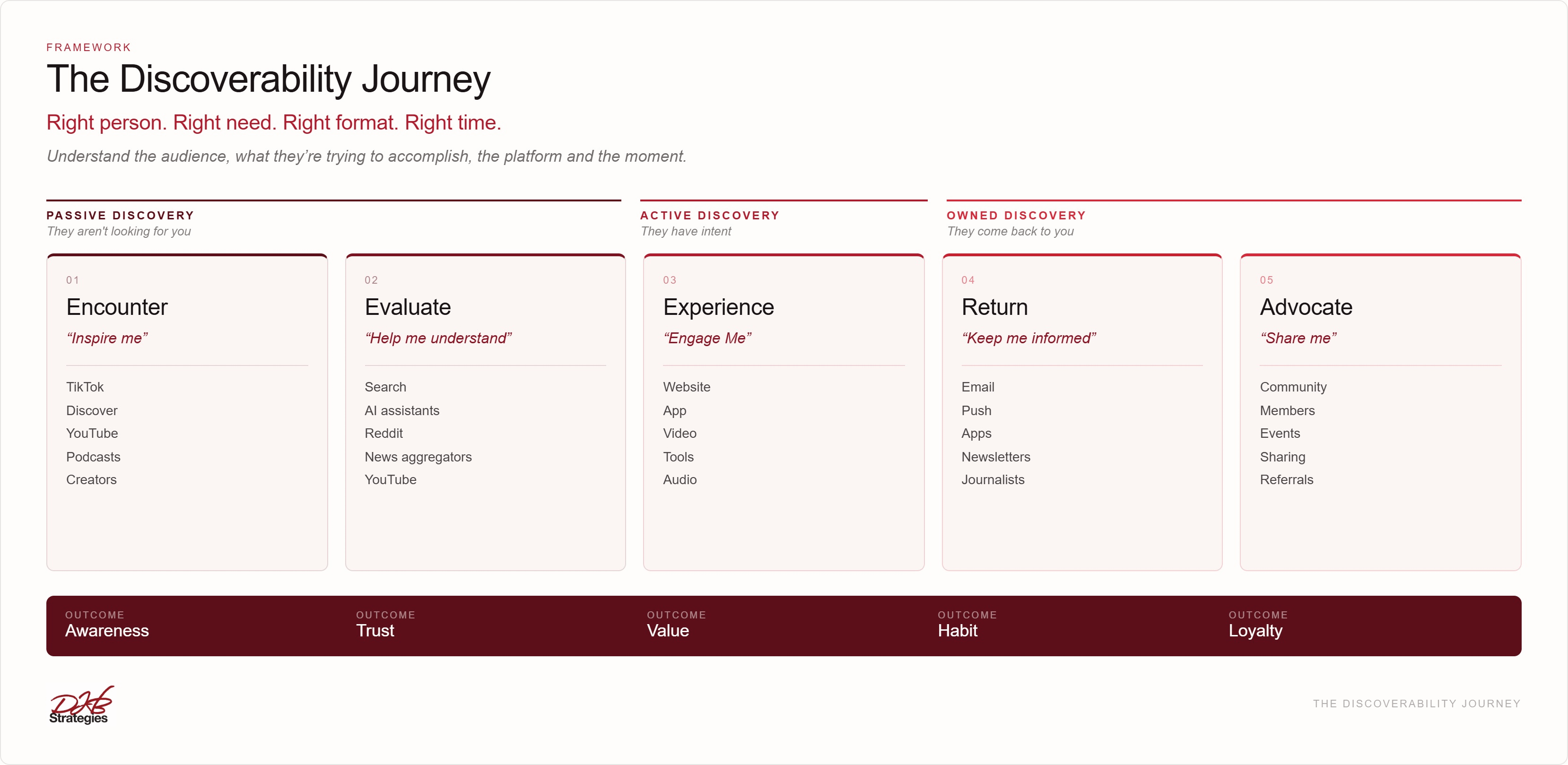
Discovery is still the first stage of the journey and the end goal is to turn paying users into fans and advocates. People who share your content and feel like they belong. But that requires a community.
It requires:
Creating habitual experiences
Reporters going below the line in the comments
Creating reader-led content
Live Q&A formats
Live events
Something the majority of publishers don’t have, but desperately need.
But discovery is predominantly passive. Your content has to encounter people algorithmically - you have to force your way into the feed. You have to inspire them, because their attention spans are at an all-time low. Which means you have to understand your audience and their needs at the time.
Once you have their attention, discovery becomes active. They want your brand to engage them. To solve their problems. But when users have been trained not to click, the click has to provide more than just an answer.
Otherwise you become a problem, you don’t solve one.
Once you have inspired and engaged a user, owned discovery takes over. Email teams, habit-forming products, follow an author features and push notifications create daily habit. The community team builds fans.
Intent-led journalism
Topic-led journalism still has its merits, but it has to evolve. It has to evolve beyond creating content because there’s demand for it. It is about solving problems for people that AI and informational content cannot do.
That is how we can create engaged users and - eventually - fans.
The foundation of intent-led journalism is understanding your audience. Once you know who you’re targeting, you should know what they need at each stage of their journey. When they’re looking to be inspired and when they’re looking to belong.
To stand out and be truly memorable, topics should include a combination of the below:
Explainers
Breaking news
Live experiences
Video and audio products
Habit-forming products and tools
Community
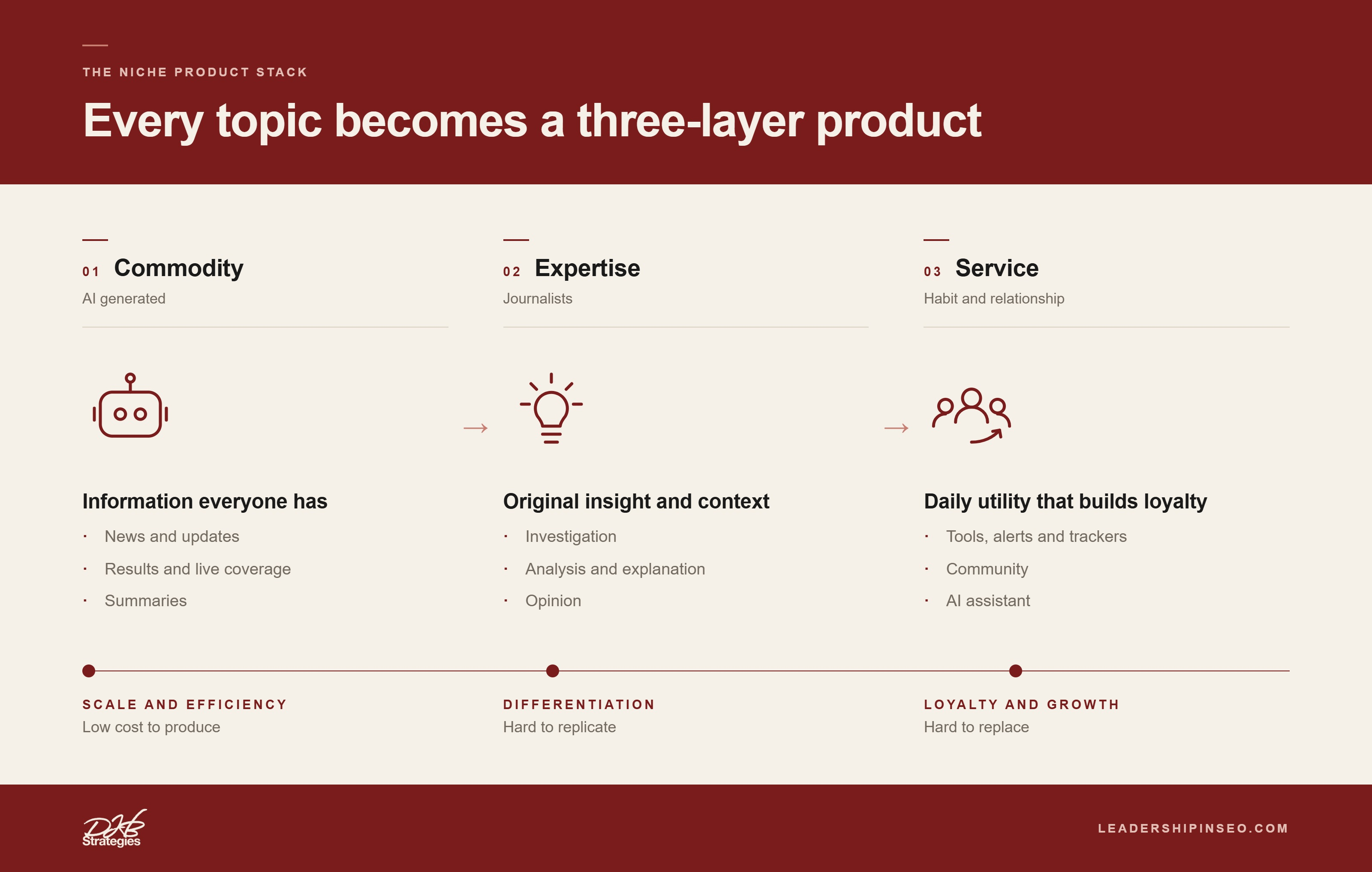
All of which are underpinned by expertise, uniqueness and authority. The pillars of EEAT and Helpful Content.
Topics need multiple discovery opportunities. For your existing website audience. For new users. For lapsed subscribers. You need to understand the appropriate mechanic and delivery mechanism for each story. It should serve a purpose.
This post from Dimitry Shishkin is an excellent framework for creating rich, robust topics that solve problems and create returning users.
The new economics of content
Articles cannot be the sole product anymore. They don’t deliver on the fundamentals of timely discoverability or problem solving effectively enough.
You need economic diversification. Evergreen content doesn’t pay the bills as consistently anymore. It is one of the areas where the NYT has been so successful.
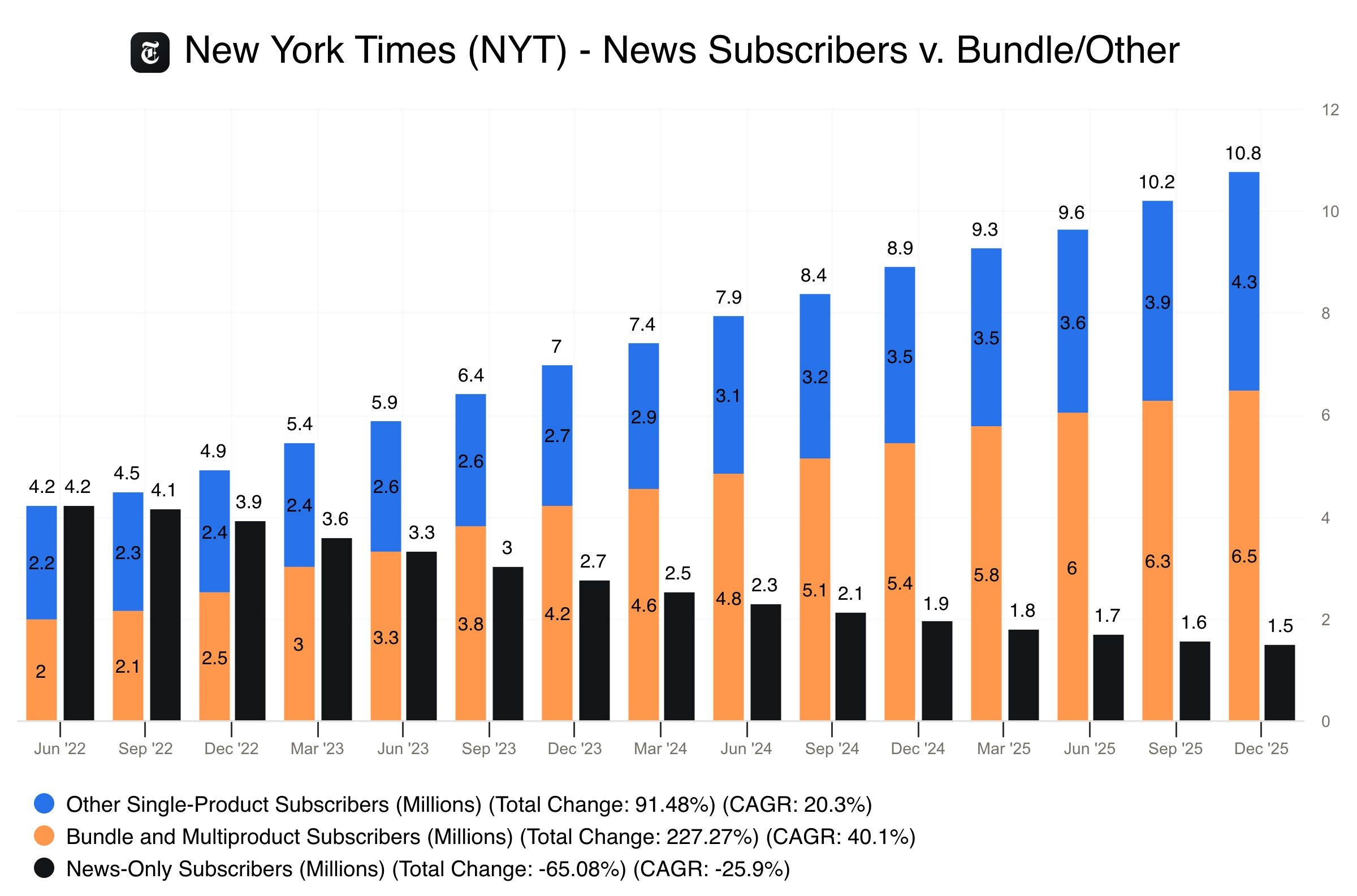
Quality articles and reportage is arguably more expensive than ever and returns less value through traditional means - typically in visits and advertising revenue. The written word is not thriving economically in a more traditional publisher model - although Substack and Beehiiv suggest the market is still there, it’s just creator-led.
Publishers have to become indispensable. Indispensable to their audience. The community. Their journalists. You have to understand what your audience want, where they want it and how they want it served to them.
Then you have to force your way in.
The publisher of the future
Over the next decade the best publishers will be those who understand their audiences and their needs better than any other.
My hunch is that search will still be the most important last click channel, but other methods of distribution will be improved so much so, that it becomes even more valuable. Albeit with an outdated attribution model.
The creator economy will continue to boom. Publishers and brands that can put their ego to the side and work out how to train journalists to build their own creator ecosystems will flourish. Yes, they’ll come and go, but so others will take their place.
Agile product, AI, design and engineering teams that can solve real business and user problems quickly and scalably will turn newsrooms into content engines of the future. Teams that give newsrooms the ability to deliver like a one man band.
The very best will be:
Audience-first
Topic-led
People-powered
Video and audio native
Search Everywhere Optimised
Distribution obsessed
Community-builders
They won’t focus solely on channels that drive a more direct return. They will accept that some of this cannot be reliably measured.
The future belongs to publishers that create things worth discovering and systems that ensure they’re discovered. Once users go through passive and active discovery, it’s up to publishers to own that relationship.
Setting up for success
I’ve always felt that publishers were ahead of the curve with audience teams. Publishers could take this a step further. A team solely focused on understanding who your audience is, where they spend time, how and where they’re influenced - even who by.
A data and product marketing arm of the audience team supplemented by a distribution arm. The team who create platform specific strategies based on the audience data they have to hand and the user and topic needs models.
Then a lightweight, roving AI-powered product and engineering team setup to build brilliant things quickly.
If we can help with anything audience, AI or future of search related, send me a message here, on LinkedIn or via our consulting practice. You know where to find me.